VOLUME III No. 3 | 17 August 2026
Digital Sierra Leone Rising: How MoCTI is Powering the Bio Innovation Agenda
One of the notable pragmatic decisions made by His Excellency President Dr. Julius Maada Bio that is receiving widespread commendations is his vision to create the Ministry of Communication, Technology and Innovation (MoCTI).
For the first time in Sierra Leone’s history, technology got its own seat at the Cabinet table.
Following his re-election in 2023, President Bio took the bold, visionary step in line with global trends: he split the then Ministry of Information and Communications into two. From it emerged the Ministry of Information and Civic Education, and the Ministry of Communication, Technology and Innovation — MoCTI.
The message was clear. Communication was no longer just about messaging. Technology and innovation would now drive jobs, governance, and national transformation. Under MoCTI, the Bio Presidency is placing digital infrastructure, start-ups, and youth skills at the centre of national development — turning “tech as the future of work and wealth” from a mere slogan to delivery.
When the President speaks of “tech as the future of work and wealth” for Sierra Leone’s youth, the Ministry of Communication, Technology and Innovation is where that promise is being translated into policy, infrastructure, and jobs.
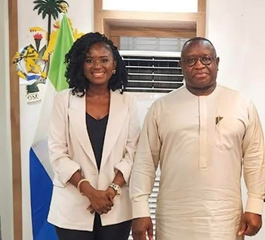
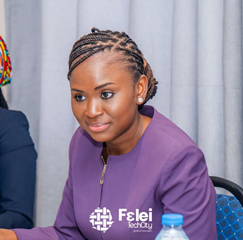
Under the leadership of Minister Madam Salima Monorma Bah Esq, MoCTI has in the last three years moved from policy papers to visible results. The creation of this Ministry itself reflects President Bio’s visionary leadership and trust in women and young people. By appointing Madam Salima Monorma Bah — the youngest minister in his government — to lead MoCTI, the President signalled that innovation, inclusion, and the future would be placed in the hands of a new generation.

At its core, MoCTI’s mandate is simple: make communication and technology work for every Sierra Leonean.
The Ministry exists to provide affordable, accessible, and reliable digital services nationwide, while serving as the government’s reservoir of technical knowledge. Through policy, research, planning and coordination, MoCTI is tasked with creating an enabling environment that drives innovation, improves service delivery, and accelerates socio-economic growth.
In short, its vision is to position Sierra Leone as a vibrant hub for communication, technology and innovation — where effective policies transform lives and build a modern digital economy. From 5G and data sovereignty to start-up funding and postal modernisation, the Ministry is now positioning Sierra Leone not just as a consumer of technology, but as a producer of digital solutions.
Delivering on the Mandate: Key Achievements in Three Years
In line with its mission, MoCTI has moved quickly from policy to implementation across 5 priority areas:
1.Digital Infrastructure and Data Sovereignty
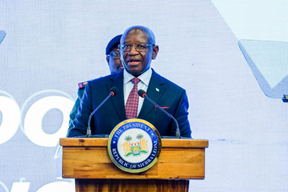
In a landmark moment, President Bio commissioned the new headquarters of the National Telecommunications Authority at Southridge, Freetown on Friday, 17 August, 2026. The facility now houses both NatCA and MoCTI, and more importantly, the National Data Centre and Network Operations Centre.
“Today is not just about commissioning a building; it is about fulfilling a promise to the young people of this country and investing in their future,” President Bio said. For the first time, government data will be hosted securely at home — a critical step towards digital sovereignty and protecting national dignity.
On connectivity, the national fibre backbone now reaches 14 of the country’s 16 districts. Through the Universal Access Development Fund, 5 new communication sites were established in underserved communities. MoCTI also launched Sierra Leone’s first open-access 5G network and has set a target to establish e-learning facilities in all 16 districts within the next five years.
2 Reviving National Assets: the Sierratel and SALPOST Rescue
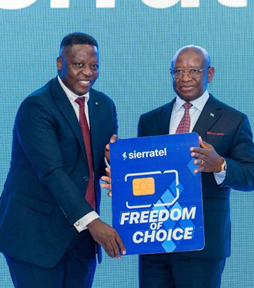
One of the most strategic wins came with the relaunch of Sierratel on 5 May 2026. After years of decline, MoCTI adopted an innovative Mobile Virtual Network Operator model — providing services without the massive cost of owning infrastructure.
Minister Bah called it “a dramatic rescue mission”- driven by a clear presidential mandate.
“Today is not just an important day for Sierratel, it is an important day for Sierra Leone,” she told staff.
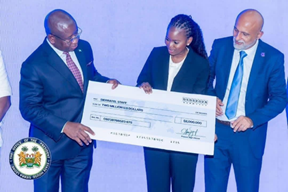
“Behind everything we are discussing here today, there are people,” she reminded the audience. In a move to restore dignity, President Bio handed over a $2 million upfront payment from Africell to begin settling long-standing staff liabilities.
“There can be no restoration of Sierratel without restoring dignity and fairness to the people who have sustained it,” Bah said. To modernise postal services, MoCTI signed an MoU with GIG Logistics to digitise SALPOST. The partnership introduces digital tracking, e-commerce support, and rural delivery, turning the post office into a player in the digital economy.
3 Funding Innovation and Youth
Under Madam Bah’s leadership, MoCTI is deliberately betting on young innovators. In December 2025, the Ministry signed a Framework Agreement with the Redsalt Angel Investment Network (RAIN) to co-fund and support early-stage start-ups. RAIN also partnered with Orange Digital Center to give founders access to mentorship and early-stage financing.
“Building a strong innovation ecosystem requires aligned partnerships, patient capital, and deliberate investment in our young entrepreneurs,” Minister Bah stated.
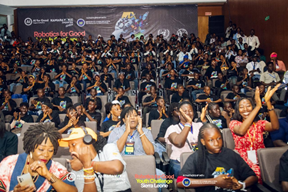
Through other programmes, MoCTI facilitated ICT training for 1,500 youth and launched Sierra Leone’s first school Tech Club during the “Careers in STEM School Tour.” Partners like InnovationSL have also facilitated over 500 direct jobs since 2021. The ambitious Felei Tech City project in Bo District is also underway — designed as a smart city and innovation hub to connect government, talent, and capital.
4.Modernising Government and Cybersecurity
MoCTI is digitising the state from within. The Ministry rolled out a centralised government email system, advanced cybersecurity frameworks through the National Cybersecurity Coordination Centre, and launched Sierra Leone’s first Open-Source Software Policy for the public sector. Over 100 ICT officers have been trained on Enterprise Architecture to manage government systems more efficiently.
5.Regional Leadership
Sierra Leone’s digital profile gained regional recognition when MoCTI hosted the 20th ECOWAS Ministerial Meeting on West Africa’s digital future in Freetown. The meeting focused on broadband expansion, AI governance, and cross-border digital trade — positioning Sierra Leone as a thought leader in the region.
THE BIGGER PICTURE
What ties these initiatives together is a clear philosophy: technology must serve people. From settling Sierratel workers’ pay, to extending fibre to 14 districts, to training youth in STEM and funding start-ups, Minister Bah and her team are executing Cluster 5 of the People’s Manifesto 2023.As President Bio noted, “Good decisions for Sierra Leone do not belong to individuals – they belong to the people. We chose to complete this project because it serves the national interest.” Under MoCTI, those decisions are now visible in fibre, in start-ups, in schools, and in a revived national telecom.
The Bio Presidency promised a digital future. With MoCTI, that future is arriving, and it would be codified as remarkable “goodies” that would be catalogued in President Bio’s resounding legacies; successes that historians, political and social commentators for generations will document and make part of national development discourse.
Author:
Alhaji Abubakarr Bah is the Information Attaché at the Embassy of the Republic of Sierra Leone to the Kingdom of Saudi Arabia. He has written extensively on President Julius Maada Bio’s legacies, which he has dubbed “The Goodies of the Bio Presidency.”