ECOWAS Ministers Renew Calls for Stronger Regional Unity
West African leaders and policymakers have renewed calls for greater regional cooperation, stronger institutions and practical solutions to emerging challenges as the 96th Ordinary Session of the ECOWAS Council of Ministers opened in Freetown.
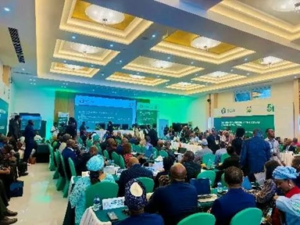
The two-day meeting, held on Thursday, 16 July 2026, at the Bintumani International Conference Centre in Aberdeen, brought together Foreign Ministers, Heads of Delegation, ECOWAS Commissioners, Ambassadors, Permanent Representatives, development partners and representatives of regional institutions.
The session is being convened ahead of the 69th Ordinary Session of the ECOWAS Authority of Heads of State and Government, which will also take place in Sierra Leone.
Declaring the meeting open, Sierra Leone’s Minister of Foreign Affairs and International Cooperation and Chair of the ECOWAS Council of Ministers, Alhaji Timothy Musa Kabba, stressed the urgent need for renewed commitment to regional solidarity amid growing political, economic and security pressures.
He said ECOWAS remains a critical platform for promoting peace, stability and development in West Africa, but warned that the organization must continue to adapt to changing realities facing the region.
“ECOWAS has achieved significant milestones since its establishment in 1975, including advancing regional integration, facilitating movement across borders, promoting economic cooperation and supporting peace and security efforts,” the Minister noted.
However, he highlighted several challenges confronting the region, including terrorism and violent extremism, unconstitutional changes of government, food insecurity, climate change, youth unemployment, inequality, irregular migration and transnational organized crime.
According to him, the future strength of ECOWAS depends on the unity, political commitment and collective action of Member States.
He emphasized that regional institutions must move beyond policy declarations and focus on implementing practical measures that improve the lives of citizens across West Africa.
The Minister said the agenda of the Council meeting reflects key priorities for the Community, including institutional reforms, peace and security, infrastructure development, trade, investment, humanitarian issues and the implementation of decisions adopted by regional leaders.
He urged delegates to approach discussions with openness and determination, stressing that the outcome of their deliberations should respond to the aspirations of more than 400 million West Africans.
“Citizens expect an ECOWAS that is responsive, innovative and capable of delivering meaningful progress in peace, security, economic opportunity and social development,” he said.
Reflecting on Sierra Leone’s own history, Minister Kabba said the country’s transition from conflict to peace demonstrates the importance of dialogue, cooperation and mutual respect in resolving regional challenges.
He reaffirmed Sierra Leone’s commitment to regional integration, democratic governance, gender equality, youth empowerment, human capital development and sustainable economic transformation under the leadership of President Julius Maada Bio, Chair of the ECOWAS Authority of Heads of State and Government.
Meanwhile, President of the ECOWAS Commission, H.E. Dr. Omar Alieu Touray, used the occasion to reflect on his four-year tenure, highlighting both achievements and challenges faced by the regional bloc.
Dr. Touray said ECOWAS had continued to pursue its mandate despite difficult circumstances, including political transitions, security threats, global economic uncertainty and the withdrawal of three Member States from the organization.
He noted that the Commission worked closely with Member States and the Council of Ministers to maintain institutional stability, strengthen dialogue and advance regional programmes.
Among the achievements highlighted were governance and institutional reforms, the operationalization of the Permanent Representatives Committee, the completion of a joint border post between Côte d’Ivoire and Ghana, the establishment of the ECOWAS Business Council and the relocation of the Commission to its new headquarters in Abuja.
He described these developments as evidence of Member States’ commitment to building stronger institutions capable of delivering greater benefits to West African citizens.
Dr. Touray encouraged Member States to use the momentum from ECOWAS’ 50th anniversary celebrations to transform the organization’s vision into concrete actions.
The Council is expected to deliberate on the 2026 Interim Report on the State of the Community, ECOWAS financial matters, implementation of previous decisions and reports from statutory committees.
Other issues on the agenda include digital transformation, investment promotion, cultural cooperation, gender equality, telecommunications, agriculture, trade, science, innovation and relations with the Alliance of Sahel States.
The meeting concludes with expectations that ministers will adopt recommendations aimed at strengthening ECOWAS institutions and advancing peace, stability and economic integration across West Africa.