By Marian Magdalene Bangura
Strategic Communication Unit – MOICE
Minister of Health, Dr. Austin Demby, has highlighted significant milestones in the country’s healthcare transformation, while urging Sierra Leoneans living abroad to become active partners in building a stronger and healthier nation.
Speaking at the Civic Day London Programme, Dr. Demby reflected on Sierra Leone’s remarkable progress in the health sector, noting that the country has moved from having one of the highest maternal mortality rates in the world, to recording substantial improvements through sustained government reforms and strategic investments.
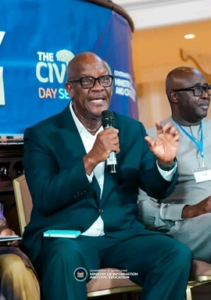
“We have made tremendous progress, but we are not satisfied,” the Minister said. “Every preventable maternal or child death is one too many, and that is why we are accelerating our efforts.”
Dr. Demby recalled that Sierra Leone once recorded approximately 1,600 maternal deaths per 100,000 live births, among the highest globally. Through deliberate investments in healthcare infrastructure, workforce development, and community health services, maternal mortality has been reduced by more than 76 per cent.
The Minister highlighted the 300 Days of Activism Campaign, launched by President Dr. Julius Maada Bio on 1st March 2026, which aims to achieve zero preventable maternal deaths and zero preventable child deaths across Sierra Leone.
According to Dr. Demby, the first 100 days of implementation have already yielded encouraging results.
“We have recorded a 31 per cen reduction in maternal deaths, an 11 per cent declin in infant mortality, and identified nearly 9,000 malnourished children, of whom almost 5,000 have already received treatment,” he revealed.
He described the achievements as evidence that focused interventions, strong leadership, and community participation can produce measurable improvements in public health.
Dr. Demby explained that Sierra Leone’s healthcare transformation is anchored on four strategic pillars designed to build a resilient and accessible healthcare system.
The first pillar focuses on strengthening primary healthcare by bringing quality medical services closer to communities through improved infrastructure, expanded staffing, preventive healthcare programmes, and modern equipment.
He disclosed that more than 380 health facilities are now powered by renewable solar energy, ensuring uninterrupted healthcare services even in remote areas.
The second pillar centres on strengthening referral systems through an expanded ambulance network supported by the national 117 emergency service.
“Health workers anywhere in Sierra Leone can call 117 and dispatch a GPS-enabled ambulance equipped with oxygen, life-support equipment, and trained medical personnel to transfer critically ill patients quickly and safely,,” he explained.
The third pillar is focused on expanding secondary and tertiary healthcare services through major investments in hospital construction and rehabilitation.
Among the flagship projects are new 100-bed hospitals in Kerry Town and the expansion of specialised maternal and paediatric healthcare facilities designed to meet the country’s growing healthcare needs.
The fourth pillar emphasises health security and emergency preparedness, drawing lessons from previous outbreaks such as Ebola and COVID-19.
Dr. Demby said Sierra Leone has significantly strengthened its disease surveillance system, deploying trained epidemiologists and surveillance officers nationwide to detect and respond rapidly to emerging public health threats.
The Minister also underscored government investments in human capital development within the health sector.
He noted that the number of medical graduates entering the workforce has increased substantially, while new hospitals and healthcare facilities are being built to serve generations of Sierra Leoneans.
Dr Demby added that the Ministry is increasingly relying on real-time digital data systems to monitor health outcomes, investigate deaths, and support evidence-based decision-making.
“Our health system is becoming more connected, more responsive, and more accountable through digital innovation,” he said.
Concluding his presentation, Dr. Demby called on Sierra Leoneans living abroad to review national development as a collective responsibility rather than an occasional engagement.
“The future of Sierra Leone cannot be built by the government alone,” he said. “Our brothers and sisters in the diaspora possess valuable knowledge, skills, experience, and networks that can help accelerate national development.”
He encouraged diaspora professionals, investors, and development partners to contribute their expertise and resources to the country’s ongoing transformation.
“Building a stronger Sierra Leone requires all of us, those at home and those abroad, working together with a shared vision and commitment,”