By: Claudia Redwood-Sawyerr
The Government of Sierra Leone has secured approval for the third disbursement under the International Monetary Fund (IMF) Extended Credit Facility programme, a development the Deputy Minister of Finance, Kadiatu Alie, described as a strong vote of confidence in the country’s financial management and economic reform agenda.
Speaking during the London edition of the Civic Day Series on June 18, 2026, the Deputy Minister said the approval reflects Sierra Leone’s successful implementation of strict structural reforms and its commitment to transparency and fiscal discipline.
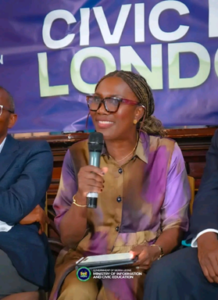
“Securing funding from the IMF requires meeting strict structural benchmarks and maintaining transparent accounting,” she said. “We are currently under an IMF Extended Credit Facility programme and have successfully completed two reviews for $80 million. I am pleased to announce that just today; the IMF approved our third instalment, signalling deep international trust in our financial management.”
Madam Alie noted that the approval comes amid continued efforts by the government to strengthen macroeconomic stability and improve public financial management. She highlighted significant progress in controlling inflation, which fell from 50 percent in October 2023 to 4.4 percent by the end of December 2025.
She also pointed to improvements in exchange rate stability, noting that the Leone depreciated by less than one percent throughout 2025, a marked improvement compared to previous years.
The Deputy Minister further outlined ongoing reforms aimed at improving accountability and revenue collection through the automation of financial systems. According to her, initiatives such as the deployment of electronic cash registers through the National Revenue Authority are helping to reduce leakages by ensuring that revenues are transmitted directly into government accounts.
Addressing concerns about the banking sector, she defended the government’s intervention in Union Trust Bank, describing it as a necessary step to protect depositors and preserve public confidence in the financial system.
“The reason the government intervened in UTB is because we are a responsible government,” she said. “If citizens deposit their money in a bank, they are entitled to get it back. As a government, we will not abandon them or allow their money to be lost.”
She emphasized that these reforms are contributing to broader economic growth, with Sierra Leone recording a real GDP growth rate of five percent in 2025 despite global economic uncertainties, while positioning the country to attract greater international confidence and investment.