By: Sallu Kamuskay
Women’s Forum Sierra Leone has concluded a one-week capacity building training for women-led civil society organisations across Moyamba, Kailahun, and Falaba districts under Outcome D of the Spotlight Initiative 2.0.
The training is part of a three-year project aimed at ending violence against women and girls. It is implemented by Women’s Forum Sierra Leone with support from UN Women, in partnership with the Government of Sierra Leone, the United Nations, and the European Union.
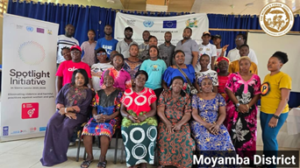
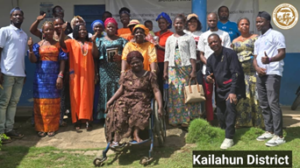
The sessions focused on leadership, governance, financial management, safeguarding, and action planning. They were led by Programme Manager Idrissa Sesay, who said the training is designed to strengthen women-led organisations and address key capacity gaps among sub-grantees.
Speaking during the engagements, the President of Women’s Forum Sierra Leone, Mrs Sally N. Adams, thanked participants and encouraged them to take the training seriously. She said violence against women remains a major concern and called on participants to take the message back to their communities.
“We founded the Women’s Forum in 1994, and today we have over 300 network members across the country working to protect and promote the rights of women and girls,” she said. She added that the organisation is pleased to serve as a lead implementing partner for the Spotlight Initiative in Sierra Leone.
In Moyamba, participants developed three-month action plans to address gender-based violence. Matinda Mayeni Mama of the Generational Impact Movement called for attitude change, noting that cultural norms often limit young advocates. “We are not unruly. We need support and protection,” she said.
In Kailahun, Fatmata B. Coker of Masanta One Women’s Group said violence against women is increasing in the district. She welcomed the initiative, noting that the training has improved their skills in leadership and financial management. She also raised concerns about female genital mutilation, especially involving young girls, and called for consent and age consideration.
In Falaba, Mrs Fatmata Baby Turay, Director of the Falaba District Women Network, said the training is timely and much needed. She noted that women and girls continue to face violence in the district and that the programme will help civil society groups better engage their communities.
The training covered nine chiefdoms across the three districts. Organisers say the goal is to place civil society at the centre of advocacy, policy influence, and accountability in the fight to end violence against women and girls across Sierra Leone.