By Esther Tucker
At a time when many nations are searching for leadership capable of navigating complex political, economic, and social challenges, Sierra Leone has produced a scholar-practitioner whose work has earned recognition beyond its borders. Dr. Ibrahim Bangura’s acclaimed research, Peace in Pieces: The Politics and Pitfalls of Peacemaking in South Sudan, stands as a significant contribution to the study of peacebuilding, governance, and post-conflict recovery.
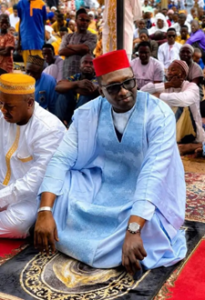
The thesis examines why South Sudan, despite achieving independence in 2011 with enormous hope and international support, descended into recurring cycles of violence and instability. Dr. Bangura demonstrates how political rivalries, ethnic polarization, weak institutions, and externally driven peace processes combined to undermine sustainable peace. More importantly, his work highlights a central lesson: peace cannot be secured through elite agreements alone. It must be built upon inclusive governance, accountable institutions, justice, citizen participation, and a shared national vision.
These lessons resonate strongly with Sierra Leone. Although the country has made remarkable progress since the end of its civil war, challenges relating to political polarization, youth unemployment, economic hardship, institutional capacity, and national cohesion remain significant. Dr. Bangura’s scholarship reminds us that the preservation of peace requires constant investment in democratic institutions, social trust, and responsible leadership.
What distinguishes Dr. Bangura is not merely his academic achievement, but his ability to connect scholarship with practical solutions. His work consistently emphasizes the importance of national unity above partisan and ethnic interests, the empowerment of young people, the strengthening of the rule of law, and the promotion of transparency and accountability in public life. These are not abstract ideals; they are essential foundations for sustainable development and national stability.
His leadership philosophy is reflected in the message: “Heal, Unite and Build.” Far from being a political slogan, the phrase captures three urgent national priorities.
Sierra Leone must heal from years of economic strain, political mistrust, and social division. It must unite around a common national purpose that transcends region, tribe, religion, and party affiliation. And it must build stronger institutions, a more competitive economy, and greater opportunities for its citizens, particularly the youth who represent the country’s greatest asset.
Dr. Bangura’s expertise in peacebuilding and conflict resolution provides a strong intellectual foundation for this vision. His understanding of reconciliation, conflict prevention, governance reform, and institutional development positions him as a leader capable of addressing the root causes of instability rather than merely managing its symptoms.
Equally important is his commitment to people-centred leadership. A Sierra Leone that expands educational opportunities, equips young people with employable skills, supports entrepreneurship, combats corruption, and ensures that national resources serve the public interest is a Sierra Leone better prepared to achieve lasting prosperity. These priorities are consistent with the principles that emerge from Dr. Bangura’s academic and professional work.
Throughout history, nations have advanced when knowledge, vision, and leadership converge. Sierra Leone’s future will depend not only on political competition but on the quality of ideas guiding national development. In that regard, Dr. Ibrahim Bangura represents a generation of leadership that values competence, inclusion, accountability, and national transformation.
As Sierra Leone looks toward the future, many citizens believe the country requires leadership capable of healing divisions, strengthening institutions, and mobilizing the collective energies of the nation. They see in Dr. Ibrahim Bangura a leader whose scholarship, experience, and vision offer a compelling framework for peace, unity, and development.
The challenge before Sierra Leone is not simply to choose leaders, but to choose a direction. The principles embodied in “Heal, Unite and Build” offer a pathway toward a stronger, more cohesive, and more prosperous nation—one in which every citizen has a stake in the country’s success and every generation inherits a more hopeful future than the one before it.
HEAL.UNITE.BUILD.