Vice President, Dr. Mohamed Juldeh Jalloh, is taking the Government’s decentralization reform agenda to Sierra Leone’s Northern Region this weekend as consultations continue on how to empower local authorities and improve service delivery across the country.
The second phase of the Regional Decentralization Tour will see the Vice President engage stakeholders in Makeni and Port Loko, where traditional leaders, local council representatives, government officials and community actors are expected to share experiences on the opportunities and challenges affecting grassroots governance.
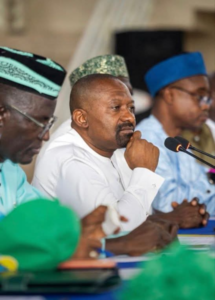
The initiative forms part of Government’s wider effort to strengthen the relationship between central authorities and local institutions by identifying practical solutions to longstanding challenges within the decentralization system.
“A Government closer to the people is a Government that works,” Vice President Dr. Mohamed Juldeh Jalloh said ahead of the Northern Region engagements.
He noted that the consultations are intended to create a platform for direct engagement with local leaders to ensure that national policies respond effectively to realities faced by communities.
The Makeni and Port Loko meetings follow similar engagements held in Kenema and Bo on August 14 and 15, 2026, where stakeholders highlighted key issues affecting local governance, including funding gaps, limited institutional capacity, coordination challenges and the need for a more effective transfer of responsibilities to councils.
During the Eastern Region consultations, Vice President Jalloh emphasized that the process was not designed for central government to impose solutions, but rather to listen and learn from those working at the community level.
“This is not a meeting where we come to tell you what to do. It is a learning process. We are here to listen to the challenges of local governance,” he stated.
The Vice President, who chairs the Inter-Ministerial Committee on Decentralization, said recommendations from the nationwide consultations would help inform government policies, Cabinet discussions and possible legislative reforms aimed at strengthening local governance.
At the centre of the discussions is the ability of councils to effectively deliver essential services, including healthcare, education, sanitation, agriculture, road maintenance, market management, drainage and social welfare programmes.
Stakeholders have repeatedly argued that local councils require adequate financial resources, skilled personnel and stronger administrative systems if they are to meet growing demands from communities.
Deputy Minister of Local Government and Community Affairs, Alfred Moi Jamiru, has called for increased investment in councils, stressing that stronger institutions are necessary for effective decentralization.
Similarly, Chairman of the Local Government Service Commission, Dr. Falla D. Lamin, has highlighted the importance of competent human resources, improved coordination and institutional strengthening in building a responsive local government system.
As part of efforts to sustain the decentralization drive, Regional Coordination Committees were established during the Kenema and Bo consultations to enhance collaboration among government institutions and address governance challenges at regional level.
The consultations are also expected to examine the working relationship between traditional authorities, local councils and central government, particularly in areas of responsibility sharing, resource allocation and accountability.
The Government plans to extend the engagements further to district level, allowing officials to gather more community-specific perspectives on barriers affecting local development.
More than two decades after the restoration of elected local councils in Sierra Leone, decentralization remains a key pillar of efforts to bring governance closer to citizens. However, challenges relating to financing, accountability, capacity and effective devolution continue to shape debates around the system.
With the Makeni and Port Loko engagements, the Government is seeking to deepen conversations on how local institutions can become more effective drivers of development and ensure that citizens experience the impact of governance beyond Freetown.