By Mahmud Tim Kargbo
Europe is right to confront cocaine trafficking. The European Parliament adopted its resolution on 17 September 2026, calling for stronger cooperation against maritime organised crime. But a parliamentary resolution is a political instrument, not a judicial determination: it does not itself establish criminal liability, prove a person’s present whereabouts, or adjudicate whether a sovereign state has breached its obligations. That distinction matters when Parliament states that convicted Dutch trafficker Jos Leijdekkers “remains at large in Sierra Leone”. The question is therefore simple: what evidence supports that present tense conclusion? https://oeil.europarl.europa.eu/oeil/en/procedure-file?reference=2026%2F2797%28RSP%29
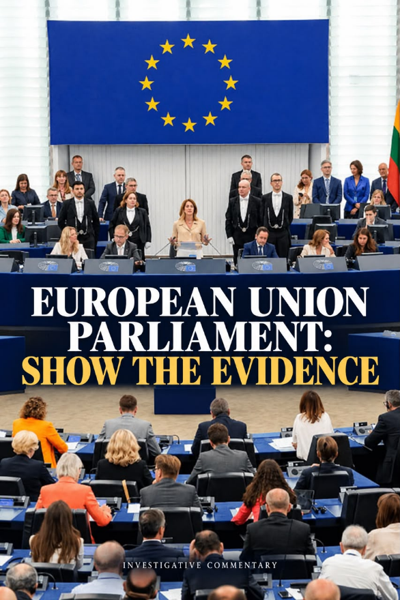
The resolution makes several propositions that deserve separate examination. It argues that criminal networks are adapting their maritime methods, that heightened security around Europe’s major ports is influencing trafficking routes through West Africa, and that judicial cooperation with third countries must consequently be strengthened. Those propositions may be well founded, but each requires its own evidentiary chain. What evidence specifically connects the wider regional trafficking pattern to Sierra Leone? What establishes Sierra Leone as a transit jurisdiction for cocaine destined for Europe, rather than one part of a broader West African corridor? And what intelligence, investigative material or official reporting was before Parliament when it adopted the resolution? https://oeil.europarl.europa.eu/oeil/en/procedure-file?reference=2026%2F2797%28RSP%29
The European Parliament’s own 2026 study provides important context. It discusses cocaine trafficking around Sierra Leone, Leijdekkers, the Dutch extradition request and the absence of an extradition treaty between the Netherlands and Sierra Leone. It also identifies Europol and Dutch prosecutors as sources for significant elements of the Leijdekkers account, while drawing on investigative reporting for other claims. That makes source classification essential. Which propositions are established by court records or official investigations, which derive from intelligence assessments, and which remain reported allegations? When Parliament moves from a regional assessment to a country specific conclusion, readers are entitled to know the evidentiary category on which that conclusion rests. https://www.europarl.europa.eu/RegData/etudes/STUD/2026/783608/EXAS_STU%282026%29783608_EN.pdf
The underlying Dutch case is considerably less ambiguous. The Dutch Public Prosecution Service stated on 24 January 2025 that police and prosecutors had investigated multiple signals and had become certain for more than six months that Leijdekkers was residing in Sierra Leone. Dutch authorities recorded his 24 year sentence for six cocaine transports involving almost 7,000 kilograms of cocaine and for ordering a murder. Those facts establish the seriousness of the case and explain Europe’s legitimate interest in securing his apprehension. They do not, however, establish where he was on 17 September 2026. A verified fact from 2025 cannot automatically become a verified fact of location in 2026. https://www.om.nl/actueel/nieuws/2025/01/24/reactie-nationale-politie-en-openbaar-ministerie-op-berichtgeving-over-gezochte-jos-leijdekkers
That temporal distinction is central to the European Parliament’s assertion. What evidence allowed Parliament to move from the Dutch authorities’ January 2025 assessment to the statement that Leijdekkers “remains at large in Sierra Leone” in September 2026? Was there subsequent intelligence, a new sighting, information supplied by Dutch authorities, Europol, Interpol or another competent service? Was that information independently corroborated or tested against material held by Sierra Leonean authorities? Confidential intelligence cannot reasonably be demanded in full, but a public institutional assertion should have an identifiable evidentiary foundation. The question is not whether intelligence exists; it is what intelligence supports the conclusion and when it was obtained.
Sierra Leone’s own official chronology also deserves examination. At its 28 January 2025 press conference, the Ministry of Information and Civic Education stated that the Government had not received a formal or informal request from the Dutch Government or another country at that stage, while confirming that President Julius Maada Bio had ordered an investigation. The same account stated that the Inspector General of Police had confirmed Sierra Leone’s access to Interpol’s I 24/7 system and that police had begun investigating the allegations. That record matters because it establishes what Sierra Leone publicly said at that particular point in time. It should not, however, be treated as the final word on a process that subsequently developed. https://moice.gov.sl/ministry-of-information-and-civic-educations-press-conference/
The chronology did subsequently change. Sierra Leone’s Ministry of Information reported that the Dutch Government had filed extradition papers through diplomatic channels and that the request was formally transmitted to the Attorney General and Minister of Justice. The European Parliament’s own 2026 study goes further, recording that on 27 October 2025 a Sierra Leonean official announced that an expedited extradition process was under way. This is important because it places the case within an evolving legal and diplomatic process rather than a static narrative of non cooperation. The proper question is therefore not whether Sierra Leone ever received a request, but what cooperation occurred, what legal steps followed, what obstacles remained, and what evidence now supports the European Parliament’s present tense assertion. https://moice.gov.sl/laying-the-alleged-drug-issues-bare/ https://www.europarl.europa.eu/RegData/etudes/STUD/2026/783608/EXAS_STU%282026%29783608_EN.pdf
The same evidentiary discipline should apply to the resolution’s wider claim that stronger security in Europe’s largest harbours is pushing cocaine routes through West Africa. A regional shift may be real, but a regional pattern does not automatically establish a country specific conclusion. Which European ports experienced the relevant security changes, over what period, and what data demonstrate displacement rather than diversification? What evidence distinguishes Sierra Leone from the wider West African trafficking corridor? If Europe intends to disrupt the entire trafficking chain, its causal claims should be tested with the same rigour that it expects from its international partners.
Sierra Leone should answer for conduct within its jurisdiction, just as European states should answer for criminal networks, financial channels, port vulnerabilities and consumer markets within theirs. International cooperation works best when scrutiny runs in both directions. Sovereignty does not shield criminality, but international concern does not dispense with evidence. The credibility of any international anti narcotics strategy ultimately depends upon whether institutions distinguish what they know from what they infer. That standard should apply equally to Freetown, Brussels and every other capital involved in the chain.
The issue is larger than Leijdekkers.
A serious international response to organised crime requires distinguishing law from political assertion, evidence from intelligence, fact from inference, and regional patterns from country specific findings. Europe is entitled to demand answers from Sierra Leone, but Sierra Leone is equally entitled to ask what intelligence, what official sources and what corroboration enabled Parliament to state in 2026 that a particular fugitive remains within its territory. That question is not resistance to international cooperation; it is the foundation upon which credible cooperation must rest. When institutions ask others to trust their conclusions, the strongest evidence of institutional confidence is not the force of the assertion, but the quality of the evidence behind it.