Waka Fine Bus Operations Face Operational Challenges
Waka Fine bus operations in Sierra Leone are facing a range of operational and financial challenges, including rising fuel and maintenance costs, traffic congestion, fare collection difficulties and scheduling constraints, according to an operational report detailing the programme’s procurement, management and sustainability arrangements.
The report highlights efforts by the authorities and the bus operator to improve public transportation services while acknowledging that the reform remains at an early stage and requires sustained institutional support, effective traffic management and public cooperation.
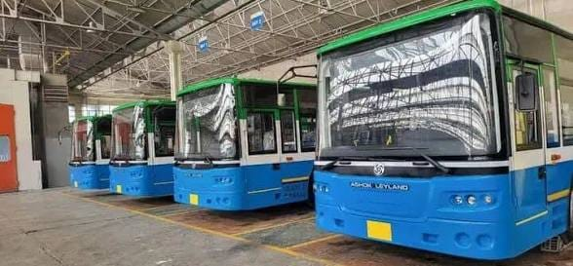
Waka Fine operations commenced in February 2024, following a procurement process that began with an international competitive bidding exercise advertised on 30 August 2021. The deadline for bid submissions was 29 October 2021, with 13 bids purchased and nine received. The evaluation process was completed on 25 January 2022, while the contract was subsequently signed on 12 July 2022.
As part of the procurement and quality assurance process, pre manufacturing inspection of the bus prototype was conducted at the Alwar Factory in New Delhi, India, on 19 March 2023. Representatives from the Ministry of Transport and Aviation (MTA), Public Financial Management Unit (PFMU), Sierra Leone Road Safety Authority (SLRSA) and the then Sierra Leone Road Transport Corporation (SLRTC) participated in the inspection.
A subsequent post manufacturing and pre shipment inspection took place at the same factory on 12 September 2023, involving the relevant government institutions, the bidder and the bidder’s banker. The buses were shipped on 30 September 2023 and arrived in Sierra Leone on 14 November 2023.
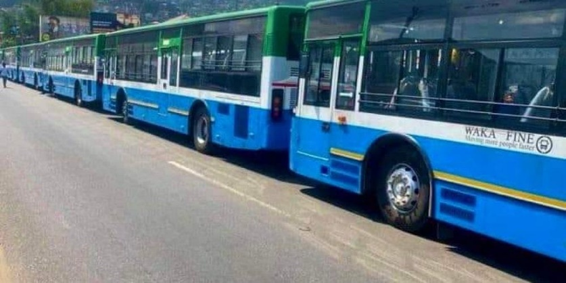
Following pre delivery inspection on 30 November 2023, the fleet was accepted on 5 December 2023, with further stakeholder inspections conducted on 8 and 9 December. The report also states that spare parts were delivered alongside the buses.
Addressing concerns about the condition and age of the fleet, the report identifies manufacturer certification, individual chassis and engine numbers, and delivery inspection reports as evidence that the buses are brand new. It further clarifies that the 2016 sticker displayed on the windshields represents the glass safety and quality standard rather than the manufacturing year of the buses.
On the operational side, the service initially commenced on a cost recovery basis, under which the bus operator, MTC, invoices the Sierra Leone Public Transport Authority (SLPTA) at the end of each month. A substantive contract between SLPTA and MTC was signed on 21 November 2024.
The buses operate daily between 6:00 a.m. and 10:00 p.m. According to the report, 42 buses are currently available, with 36 deployed for regular operations and six kept on standby to address scheduled emergencies, driver shortages and training requirements.
However, fare collection remains one of the major areas requiring improvement. The initial arrangement, which did not establish a fixed percentage for fare collectors, was terminated because it proved financially unsustainable. Under the revised arrangement, the fare collector’s commission, initially set at 15 per cent, has been reduced to 10 per cent, with the possibility of further reduction to as low as three per cent depending on revenue generated.
Although a card based payment system has been introduced, the report acknowledges that insufficient outlets for card top ups have contributed to continued reliance on cash payments. Plans are reportedly underway to integrate the payment system with mobile money platforms, including Afrimoney, Orange Money and Q Money. There are also plans to restore onboard cameras, point of sale (POS) systems and T 20 machines to strengthen monitoring and improve revenue collection.
The report further identifies traffic congestion along the operational corridors as a significant obstacle to efficient service delivery. The return of commercial motorbike operators, poda podas and kekes to the corridors, street trading along Sani Abacha Street, heavy duty vehicle parking between Upgun and Sarola, and mixed traffic use on Savage Street following the closure of the old railway line bridge have all contributed to congestion.
These conditions have increased operational costs, reduced bus turnaround times and negatively affected revenue generation.
Other challenges include rising fuel prices, maintenance expenses and the financial implications of operating buses regardless of passenger numbers. The report explains that buses must continue their scheduled journeys whether fully occupied or carrying empty seats, creating additional financial pressure.
Driver related expenses also contribute to operational costs. Each bus operates with two drivers per day, while MTC is responsible for statutory and employment related obligations, including NASSIT contributions, PAYE, medical expenses, end of service benefits and uniforms for drivers and administrative staff.
To address concerns surrounding the operator’s management and performance, the Ministry of Transport and Aviation has requested an operational audit of MTC, a request to which the Audit Service has reportedly responded.
On sustainability, the report identifies regular driver training, effective bus maintenance and fuel management as essential internal priorities, noting that fuel alone accounts for more than 50 per cent of operational costs. Externally, improved traffic management, enforcement of existing laws, protection of designated transport corridors and greater public acceptance of the reforms are considered critical.
The SLPTA, as the public transport regulator, is expected to strengthen coordination, contract monitoring and fare or tariff regulation to ensure effective service delivery.
The report describes the Waka Fine reform as being at an embryonic stage, arguing that comparable public transportation reforms in countries such as the United Kingdom, Lagos State in Nigeria and Senegal took several years to achieve significant progress.
It also acknowledges the importance of civil society monitoring but encourages stakeholders to undertake proper research and engage relevant institutions before making public assertions about the programme.