Bio’s Govt Continues to Subsidize Fuel
By Lamin Bangura
In a move that has surprised many Sierra Leoneans, the government of President Julius Maada Bio has continued to subsidize petroleum products even as prices on the world market have sharply increased.
At a time when many nations are passing the full cost of the global energy crisis to consumers, the Bio administration has chosen to cushion its people from the shock.
Over $8 Million Spent to Cushion Citizens
This was disclosed by the Minister of Trade and Industry, Alpha Sesay, during the national policy hearing on the 2027 Financial Year Budget held last week.
According to the Minister, for the past couple of months, government has spent over $8 million on petroleum subsidies. In fact, figures from the National Petroleum Regulatory Authority (NPRA) show government has spent approximately $8.3 million in just the last three months to keep prices below market levels.
“We all know what the implications are when the price of energy goes up. Everything else is affected,” Minister Sesay explained.

The subsidy has become necessary because global crude prices have risen sharply – from $62.24 per barrel in December 2025 to $105 per barrel in September 2026 – driven largely by geopolitical instability and the ongoing conflict involving Iran, which has disrupted shipping through the Strait of Hormuz.
What Sierra Leoneans Are Paying Now
Effective 8th September 2026, the NPRA announced new pump prices:
– Petrol: NLe40 per litre
– Diesel: NLe45 per litre
– Kerosene: NLe42 per litre
Without government intervention, the prices would have been far higher. Under the approved pricing formula, which considers the Platts international reference price and the exchange rate from the Bank of Sierra Leone, the true pass-through price should be NLe41.04 for petrol and NLe46.76 for diesel.
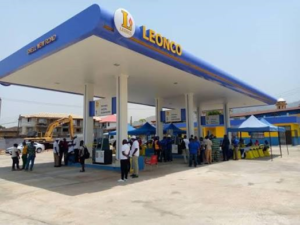
Government is therefore absorbing NLe1.04 on every litre of petrol and NLe1.76 on every litre of diesel as subsidy. This intervention came after days of artificial scarcity, when several Oil Marketing Companies reduced or halted sales to pressure government for higher prices.
Why The Subsidy Matters
Sierra Leone is a net importer of petroleum products and is therefore highly vulnerable to external shocks. When fuel prices rise, transportation costs rise, food prices rise, and the cost of doing business rises.
By continuing the subsidy, which has averaged about $1.6 million per month since April 2026, government is trying to:
- Prevent a transport crisis and keep the Waka Fine buses and commercial vehicles running
- Stabilize food prices and inflation
- Protect small businesses that depend on generators and fuel
- Maintain social stability at a time when cost of living is high
Under Director General Brima M. Baluwa Koroma, the NPRA has also doubled national fuel storage capacity from 124,000 metric tons to 237,000 metric tons, extending the import cycle from 10 days to 42 days, to avoid future shortages.
While some citizens argue that NLe40 and NLe45 are still too high, especially compared to Liberia and Guinea, many economists agree that without the $8 million subsidy, the situation would have been far worse for the ordinary Sierra Leonean.
The government says it will continue to review prices periodically and has promised that if world market prices fall, the relief will be passed on to consumers.