President Bio Calls On African Leaders To Embrace Strategic Leadership
University of Cambridge, England, Friday 22 May 2026 –
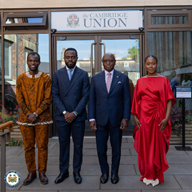
His Excellency President Dr Julius Maada Bio, President of the Republic of Sierra Leone and Chairman of the ECOWAS Authority of Heads of State and Government, has delivered a compelling Presidential Lecture at the Africa Together Conference 2026 at the University of Cambridge, calling on African nations to embrace strategic leadership, institutional resilience, and bold decision-making in an era of global disruption.
Speaking on the theme, “Africa in an Age of Disruption: Power, Agency and Strategic Choice,” President Bio reflected on Africa’s complex historical journey and the urgent need for the continent to move from dependency to strategic agency in shaping the future global order.
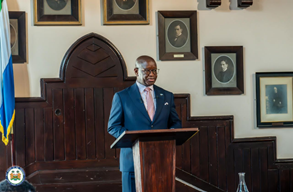
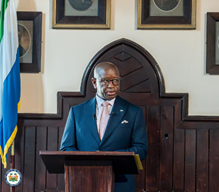
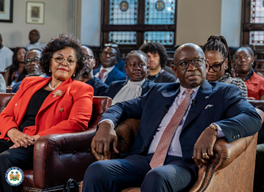
Addressing scholars, students, members of the African diaspora, and distinguished guests at the prestigious University of Cambridge, President Bio described the current global moment as one defined by rapid technological change, climate pressures, geopolitical fragmentation, and democratic fragility. He warned that Africa’s greatest risk was not disruption itself, but “entering an age of disruption without strategic agency.”
Drawing from Sierra Leone’s own history, the President recounted his experiences during the country’s civil conflict and transition from military rule to democratic governance in 1996. He emphasized that true leadership lies not in seizing power, but in submitting power to constitutional order.
“As President of Sierra Leone and Chairman of ECOWAS, I can say with certainty that disruption is no longer theoretical for Africa,” President Bio stated, citing unconstitutional changes of government, violent extremism, economic shocks, disinformation, and climate insecurity as some of the major challenges confronting West Africa today.
President Bio also highlighted Sierra Leone’s governance and development reforms since 2018, including the Free Quality Education Programme, expanded healthcare services, women’s empowerment initiatives, agricultural transformation through the Feed Salone Programme, and investments in youth employment, technology, and public sector reform.
The President stressed that human capital development remains Africa’s most strategic long-term investment, adding that sustainable transformation requires both institutional strength and accountability from African leaders.
On the future of Africa’s strategic positioning, President Bio identified three critical arenas that will shape the continent’s future: Technology and Digital Sovereignty, Economic Transformation, and Climate Change Resilience. He urged African nations to become creators and owners of technology rather than passive consumers, particularly in the field of Artificial Intelligence.
“Africa must not only adapt to the future of Artificial Intelligence. Africa must help shape it,” he declared.
President Bio further called for stronger partnerships between African institutions and global academic centres such as Cambridge, based on mutual respect and co-creation of knowledge rather than historical hierarchies. He challenged the African diaspora to contribute more actively to Africa’s transformation through investment, mentorship, innovation, and knowledge exchange.
In his concluding remarks, the President used the symbolism of a communal African fire to illustrate the importance of intergenerational leadership, wisdom, and continuity. He urged Africa’s younger generation to courageously shape the future rather than merely inherit it.
“History is already moving,” President Bio concluded. “The question is whether Africa will move as an Author or as an Observer.”
For media enquiries{
State House Media and Communications Unit