Sierra Leone’s FY2027 budget process should produce tax policies that increase domestic revenue without unnecessarily discouraging investment, business expansion and formalisation, Vice President Dr Mohamed Juldeh Jalloh has said.
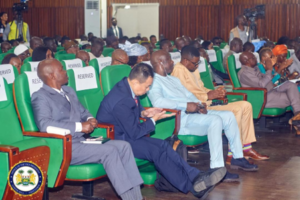
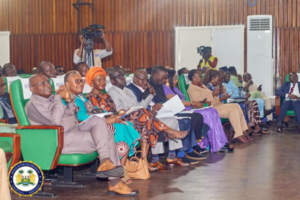
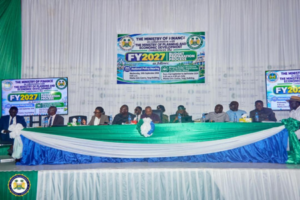
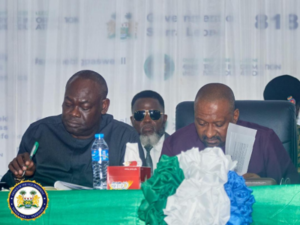
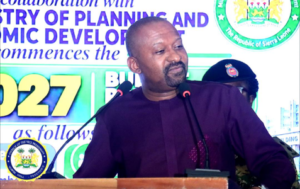
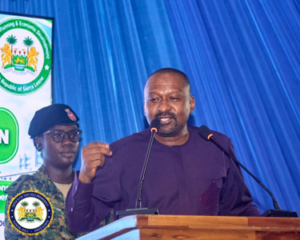
Addressing Government officials, Parliamentarians, development partners and private-sector representatives at the formal commencement of the budget process, at the Miatta Civic Centre on Wednesday 16 September 2026, Dr Juldeh Jalloh argued that the quality of taxation mattered alongside the amount of revenue collected.
“A tax measure may generate additional revenue in the short term while imposing costs that discourage investment, expansion or formalisation over the longer term,” he said. He, therefore, called for future Finance Act proposals to be increasingly data-driven, evidence-based and investment-friendly.
The Vice President directed the Revenue and Tax Policy Division of the Ministry of Finance, working with the National Revenue Authority’s Research Division, to undertake appropriate impact assessments, regional benchmarking and meaningful engagement with the private sector before major tax measures are proposed.
He said Government needed to understand how Sierra Leone compared with competing investment destinations and how proposed measures could affect different sectors. He also called for greater scrutiny of fiscal incentives, saying Government should increasingly demonstrate what the country received in return through investment, production, exports, employment or other measurable economic benefits.
The approach forms part of the broader budget objective of creating conditions in which private businesses can expand and contribute to the Government’s employment and growth ambitions.
Dr Juldeh Jalloh linked these reforms to the wider support Sierra Leone was receiving from development partners, acknowledging the World Bank, European Union, IMF, African Development Bank and others for their contributions to institutional reforms, technical assistance, policy dialogue and efforts to improve the investment climate.
“Today, they are also working with us to strengthen our institutions, improve the investment climate, develop stronger public-private partnerships and create better conditions for Sierra Leonean and international businesses to invest and grow,” he said.
The EU has separately highlighted its work with Sierra Leone on improving the business environment and strengthening trade and investment relations, including through the 2026 launch of the European Chamber of Commerce and advancement of the Global Gateway agenda.