Yaoundé, Cameroon, Thursday 26 March 2026
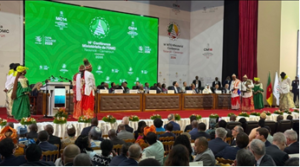
The World Trade Organization (WTO), headquartered in Geneva, officially opened its 14th Ministerial Conference (MC14) in Yaoundé, Cameroon. The high-level gathering, which runs from 26 to 29 March, brought together approximately 3,000 delegates from across the globe at the Yaoundé Conference Centre.
Sierra Leone’s delegation is led by the Minister of Trade and Industry, Mr. Alpha Ibrahim Sesay, with the country’s Permanent Representative to the WTO in Geneva, Ambassador Dr. Lansana Gberie, also in attendance. The conference is being chaired by Cameroon’s Minister of Trade, Luc Magloire Mbarga Atangana.
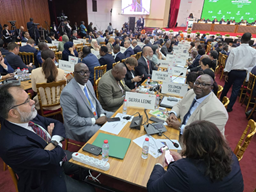
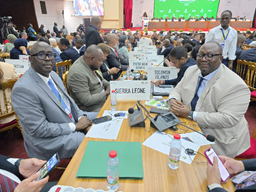
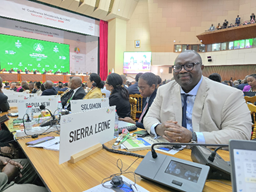
The opening ceremony was graced by senior state officials, including the Prime Minister of Cameroon and the Vice President of The Gambia, and featured vibrant cultural performances by traditional dance troupes.
Despite the celebratory atmosphere, the conference is unfolding against a backdrop of significant challenges confronting the multilateral trading system. Delegates are grappling with limited progress—referred to in WTO parlance as “convergence”—on several critical issues, including WTO reform, agriculture, e-commerce, dispute settlement, and the long-standing principle of consensus-based decision-making.
Ahead of the conference, the United States Trade Representative, Jamieson Greer, issued a statement criticizing the WTO as representing “a status quo that has become economically unworkable and politically unacceptable,” underscoring growing tensions within the global trade architecture.
This contrasts sharply with the relative optimism that characterized the 12th Ministerial Conference held in Geneva in June 2022. Under the leadership of WTO Director-General, Ngozi Okonjo-Iweala, members achieved notable outcomes, including agreements on fisheries subsidies, food security, COVID-19 response measures, and aspects of e-commerce—collectively known as the Geneva Package.
At a pre-conference meeting held a day before the official opening, Minister Sesay—who currently serves as Chair of ECOWAS Ministers of Trade—emphasized the importance of unity and coordinated engagement among African countries.
“Our positions,” he stated, “are anchored on the Maputo Declaration, Agenda 2063, and ECOWAS Vision 2050. These frameworks define our shared ambition for inclusive growth, structural transformation, and sustainable development.”
He called for a cohesive ECOWAS position across key negotiating areas, including WTO reform and dispute settlement, Special and Differential Treatment (S&DT), and agriculture and food security. He also highlighted the importance of advancing negotiations on fisheries subsidies (Phase II), addressing issues related to LDC graduation and the Enhanced Integrated Framework (EIF), and maintaining clarity on the e-commerce moratorium and African Union observer status.
He reiterated these priorities during another pre-conference engagement, this time with LDC Trade Ministers, emphasizing the need for alignment and coordinated advocacy among developing countries in ongoing WTO negotiations.
His call for unity was strongly endorsed by ministers and representatives from across the region, including Nigeria, Ghana, Senegal, and The Gambia. Participants also commended the ECOWAS Commission for its leadership in coordinating regional positions ahead of MC14.
Minister Sesay reiterated similar priorities during a separate pre-conference engagement with Least Developed Countries (LDC) Trade Ministers.
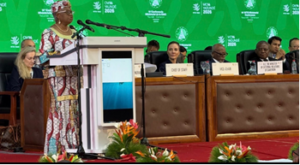
In her opening remarks, Dr. Okonjo-Iweala noted that the global trading system must adapt to a rapidly evolving landscape, but stressed that the WTO remains indispensable.
For further information, please contact:
Mohamed Sheriff
Information Attaché | Permanent Mission of Sierra Leone, Geneva