By Abubakarr Bah
BEYOND FREE FEES: How Minister Dr. Ramatulai Wurie is Revolutionising Sierra Leone’s Technical and Higher Education
PART ONE
In Volume 1 number 3 of the “Goodies of the Bio Presidency”, I highlighted the cumbersome problems our country faced in education sector dating from independence. From the 1960s to the 80s, “education was regarded as a privilege” due to several compounding factors, such as overcrowded classrooms, poor facilities, as well as disregard for teachers’ welfare among others. In that article, I vividly laid bare for my readers some historical facts in the 1960s and 80s during which wealth, ill-gotten or not, was more valued than education and there was a popular Krio proverb invented at the time: “Den say Bailor Barrie and you say Davison Nicol”.
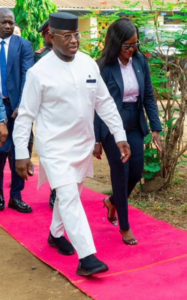
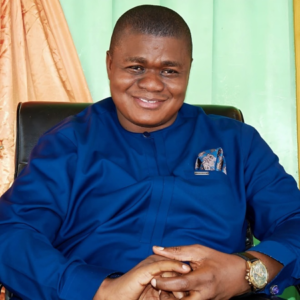
Davidson Nicol was one of the greatest scholars in the country at the time, but not one you would describe as wealthy. Bailor Barrie, on the other hand, was very popular for his wealth, which he primarily acquired through business. The political class at the time promoted a ‘Bailor Barrie’ agenda instead of a ‘Davidson Nicol’ one. This popular saying during those days, explained only one thing: that the government at the time never prioritised education. This, to a large extent, contributed to decades of education decline. It was a time young people dropped out of school to engage in petty trading.
In this edition, I will give a perspective that clearly pictures the massive progress being made in Sierra Leone’s education, especially at the Tertiary sector, since His Excellency President Dr. Julius Maada Bio assumed office in 2018 with a clearly strong vision and commitment to Free Quality School Education (FQSE) programme launched in August 2018. This laid a strong foundation that enabled the young vibrant Dr. Haja Ramatulai Wurie to excell at the Ministry of Tertiary and Technical Education since she was appointed as Minister in 2023. Under the leadership of Dr. Ramatulai Wurie, building on the strong foundation laid by her predecessors, the tertiary education sector attained significant milestones. Between 2018 and 2026, the number of university graduates rose from 27,000 to 74,000. This has turned Bio’s bold free-education promise into a system-wide transformation.
When His Excellency President Dr. Julius Maada Bio took office in April 2018, his first executive order was one that many commentators described as politically brave but fiscally impossible: free education for every child in public school. He backed it by nearly doubling the education budget from 11% to 20%.
That pledge – provision of Free Quality School Education – became the most visible goody of the Bio Presidency. But, in 2019, Bio took a second, quieter decision that may prove more consequential: he split the Ministry of Education and created a dedicated Ministry of Technical and Higher Education.
For decades, technical and vocational training had been the neglected part of the education system. The creation of MTHE elevated skills from an afterthought to a national priority aligned with Pillar 2 of the Big Five Game Changers – Human Capital Development. Seven years on, the results are tangible.
This is the definitive story of that quiet revolution.
- A System Expanded
Today, Sierra Leone’s post-secondary system – universities, technical universities, a polytechnic and 11 Government Technical Institutes – serves over 27,000 students annually.
Growth has been recorded at every institution: Ernest Bai Koroma University: +127% from 2,101 to 4,772 students; Eastern Technical University: +101% from 4,600 to 9,200 students; Njala University: +40% to over 18,000 students; and University of Makeni: +37% in undergraduate admissions.
Collectively, universities have produced over 67,000 graduates since 2018. With TVET included, the total output is over 74,000 graduates – the middle-level manpower needed to drive Feed Salone and national development.
The rebranding of the 11 GTIs since 2019 has been central. Together, they have produced over 5,250 graduates across 15 trades. GTI Dorma leads with over 1,200; GTI Kabala with over 1,100; GTI Moyamba with over 900; and GTI Mattru Jong – established only in 2022 – with over 800 already.
This has allowed government to gradually harmonise curricula to ensure demand driving training, strengthen industry linkages and align training with a growing economy – a shift Minister Dr Haja Ramatulai Wurie has called “vital to building the workforce our country needs for sustained economic growth.
- The Gender Dividend
The Presidency’s Proudest Goody
Perhaps the most striking transformation is in gender equality – a deliberate result of the Radical Inclusion Policy, the Gender Equality and Women’s Empowerment Act, and targeted scholarships.
At the University of Sierra Leone, female graduates rose from 41.1% in 2020/21 to a peak of 55.0% in 2023/24, remaining at 54.7% in 2025/26.
At the University of Makeni, from 33.2% in 2020 to 53.0% in 2025. Milton Margai Technical University achieved 51.6% female graduates in 2023/24 – proof that women are excelling in technical education.
At Eastern Technical University, Health Sciences is now 65.7% female and Agriculture 69.6% female.
In TVET, GTI Kabala leads with 60% female graduates, followed by GTI Mattru Jong at 45%.
These are not just statistics; they are teachers, nurses, engineers and entrepreneurs reshaping their communities – the ultimate return on the free-education bet.
- Investment Behind the Numbers
The Government’s Grant-in-Aid programme has underpinned this expansion. Since 2018, it has supported 17,436 beneficiaries, with awards growing from 2,200 in 2018/19 to 5,982 in 2023/24 – a 172% increase.
Crucially, 55.7% of all beneficiaries have been female. In 2023/24, for the first time in the nation’s history, female beneficiaries outnumbered males – 3,003 women compared with 777 in 2018/19, a 286% increase.
Female participation in STEM has reached 52.4% of 7,296 supported students, with TVET female beneficiaries at 39.4%. Quality has kept pace with quantity. Through the Upgrade of Lecturers programme, 132 lecturers have been supported for Masters and PhD degrees. Njala University has increased its PhD-qualified staff from 22.5% to over 32%, while EBK University has completed intensive research training.
Sierra Leone is also looking outward. 480 scholars are studying in 12 countries – Russia, Hungary, China, Morocco, Cuba – in medicine, engineering and technology, while at home the government has built more than 1,500 classrooms, trained over 20,000 teachers, and connected 23 university campuses with Starlink-enabled internet.
- Reform Beyond Enrolment: The System Gets Smart
What distinguishes the second term of the Bio Presidency is the move from access to architecture.
Now, there is a Centralised Admissions Secretariat (CAS) in its pre-implementation phase. Under Dr. Ramatulai Wurie, wheels are in motion for centralised admissions to be fully implemented following approval from cabinet with a structured roadmap now underway for a full operationalization ahead of the next admission circle. The Ministry now has a formal partnership with Nigeria’s Joint Admissions and Matriculation Board to support it. As a government-approach mechanism, the Ministry is also working in consultation with the National Communications Authority (NatCA), the National Civic Registration Authority (NCRA) and the West African Examinations Council (WAEC) to ensure faster implementation.
Research and Global Partnerships: Sierra Leone’s accession to WASCAL – the West African Science Service Centre on Climate Change and Adapted Land Use – strengthens access to shared research infrastructure and climate science networks. At home, the Science, Technology and Innovation Council has been revived, four competitive grants awarded, and a National Research and Innovation Policy are being developed in collaboration with UNESCO. An MoU with US-based Agilix Labs has led to the establishment of a community learning centre in Kono District, offering tailored training programmes in the ICT space that can lead to gainful employment, with a second centre planned for Freetown to be hosted at Freetown Polytechnic.
Infrastructure & Institutional Development: Kono University at 86% Pre-phase Completion:
Another goody of the Bio Presidency is Government’s massive support to the Kono University of Science and Technology. The Bio administration’s support has reached 86% pre-phase completion of the project. This project is divided into two phases. Phase One, known as the pre-phase, is supported by two million US dollars from the Government of Sierra Leone and is currently 86% complete. Phase Two, valued at thirty-two million US dollars from the India Exim Bank, will commence at the end of this year.
The Government has also secured $508,000 from WAHO as support for the university clinic in Kono aimed at serving students and the surrounding communities.
A video posted on Facebook by Kono Unifier Blogger showed the resident Member of Parliament (MP) for Gbense, Kono Central, Honourable Saa Emerson Lamina, paying a snap visit last weekend to the ongoing construction of the Kono University of Science and Technology (KUST).
During his tour of the facility, he commended His Excellency President Dr Julius Maada Bio for his commitment to developing the district’s educational standing, noting that 100 years after the introduction of Western education, Kono District is set to get its own university of science and technology.
“We are very proud of this milestone achievement for our district after a century of marginalisation. This is a generational wealth investment for the children of Kono, fully funded by the Government of Sierra Leone. This facility will enable the sons and daughters of Kono District to acquire quality tertiary education in their home district after secondary school. I would also like to commend the hardworking Minister of Technical and Higher Education, Dr Haja Ramatulai Wurie, for her leadership in all of this,” he said.
Hon. Emerson Lamina and the people of Kono will certainly never forget this remarkable educational dividend, and it will undoubtedly be catalogued as a milestone that will inject significant value into the human capital development of the next generation — not just for the children of Kono, but for all those who enrol in the university.
To be continued…
Author:
Alhaji Abubakarr Bah is the Information Attaché at the Embassy of the Republic of Sierra Leone to the Kingdom of Saudi Arabia. He has written extensively on President Julius Maada Bio’s legacies, which he has dubbed “The Goodies of the Bio Presidency.”