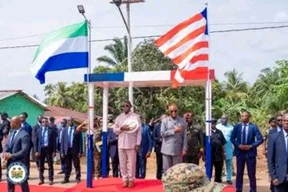
Sierra Leone and Liberia have taken a significant step toward deepening regional integration and accelerating economic development with the launch of a major cross-border road infrastructure project at the Bo–Waterside border. The initiative signals a renewed commitment by both nations to transform connectivity within the Mano River Union and unlock new economic opportunities.
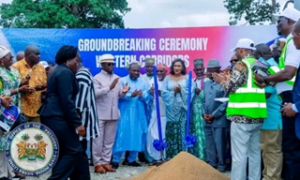
The historic ceremony was jointly led by Joseph Nyuma Boakai and Julius Maada Bio, who performed a symbolic groundbreaking for the upgrading of approximately 225 kilometres of key primary roads across Liberia. The event underscored the growing partnership between the two neighbouring countries and their shared vision for sustainable development.
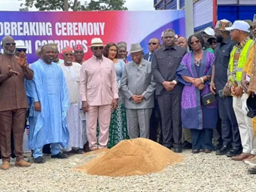
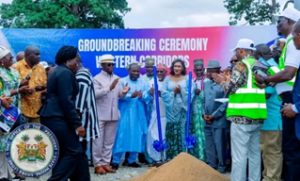
At the center of this ambitious initiative is a 25-year Public-Private Partnership (PPP) agreement between the Government of Liberia and Pavifort AL Associates Inc.. The project, valued at an estimated US$364 million, will be financed through a collaborative structure in which Pavifort contributes 60 percent of the funding, while the Liberian government provides the remaining 40 percent. This model reflects an increasing reliance on private sector participation to address critical infrastructure deficits in the region.
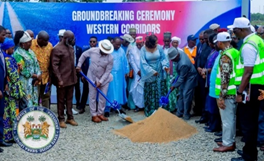

The road development programme focuses on two major transport corridors designed to reshape mobility and trade.
The Western Corridor will include a modern four-lane highway extending from St. Paul Bridge to Klay (38 km), and onward to Bo-Waterside (79 km). Additional feeder routes will connect Klay to Tubmanburg and Madina Junction to Robertsport, significantly improving access to coastal and commercial zones.
Meanwhile, the Northern Corridor will feature an 86-kilometre two-lane road linking Voinjama to Mendikorma. This segment is expected to open up remote regions, enhancing accessibility for rural populations and facilitating the movement of goods and services.

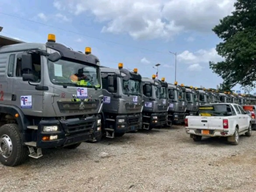
According to Liberia’s Deputy Minister for Technical Services at the Ministry of Public Works, Hon. Prince D. Tambah Sr., the project represents a transformative milestone in national infrastructure development. Spanning Montserrado, Bomi, Grand Cape Mount, and Lofa counties, it is poised to strengthen regional trade links, improve mobility, and stimulate long-term economic growth.
Modern Infrastructure with Long-Term Vision
The project adopts a full lifecycle approach, covering design, construction, operation, maintenance, and eventual transfer to the Liberian government. Roads will be constructed to international standards, incorporating both dual carriageways and single carriageways adapted to terrain and traffic conditions.
Key features will include:
Street lighting and advanced drainage systems
Bridges and pedestrian walkways
Traffic management systems
Designated rest stops for commuters
Importantly, climate-resilient engineering solutions will be embedded to ensure durability in the face of environmental challenges.
To guarantee sustainability, four regional maintenance units will be established, alongside structured maintenance frameworks and training programmes aimed at building local technical expertise. Additionally, three tolling stations will be installed at Po River, Klay Junction, and Bo-Waterside to generate revenue for ongoing upkeep.
Social Impact and Safeguards
The project integrates strong social and environmental protections. A Resettlement Action Plan will ensure fair compensation and livelihood restoration for affected communities, while strict adherence to environmental and labour standards will guide implementation.
Beyond infrastructure, the initiative is expected to generate over 1,000 jobs, with particular focus on youth employment, thereby contributing to social stability and economic empowerment.
Leadership Perspectives and Regional Significance
Chief Executive Officer of Pavifort, Alhaji Alimu Sanu Barrie, described the project as both historic and symbolic, emphasizing its potential to deepen ties between Sierra Leone and Liberia. He noted that improved road networks would lower transportation costs, boost cross-border trade, and help curb illicit activities such as smuggling.
On the legislative front, Liberian Senate President Pro Tempore Hon. Nyonblee Karnga-Lawrence and House Speaker Hon. Richard Nagbe Koon, both emphasized the importance of transparency, accountability, and strong oversight. They highlighted the Legislature’s role in ensuring that the concession agreement delivers tangible benefits to communities, including support for educational institutions and local organizations.
President Bio framed the Bo–Waterside crossing as a point of unity rather than division, calling the project a “dividend of peace” and a reflection of the stability both nations have achieved. He stressed its importance within the broader ECOWAS integration agenda and encouraged similar initiatives across West Africa.
President Boakai, delivering the keynote address, acknowledged Liberia’s infrastructure challenges, noting that only about 10 percent of the country’s 14,000 kilometres of roads are paved. He described the project as a critical step toward reversing that trend and unlocking development in underserved regions.
A New Chapter for the Mano River Region
With completion targeted for 2030, the project is expected to transform Liberia’s western corridor into a vibrant hub of trade and economic activity. It will also strengthen cross-border cooperation, improve access to essential services, and enhance livelihoods for thousands of citizens in both countries.
Ultimately, this initiative represents more than a road construction project—it is a bold statement of regional unity, economic ambition, and shared progress. By turning borders into bridges, Sierra Leone and Liberia are paving the way for a more connected and prosperous Mano River region.