By Shadrach Aziz Kamara
The National Telecommunications Authority (NaTCA) has on Wednesday 27th October 2026, unveiled advanced telecommunications equipment designed to strengthen spectrum management, improve mobile network quality and enhance regulatory oversight of Sierra Leone’s telecommunications sector.
The equipment was provided under the Sierra Leone Digital Transformation Project, funded by the World Bank, as part of efforts to improve digital connectivity, strengthen institutional capacity and ensure that telecommunications operators deliver reliable services to consumers.
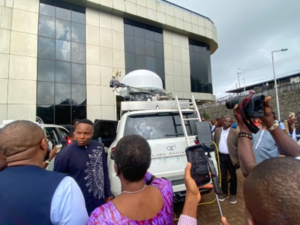
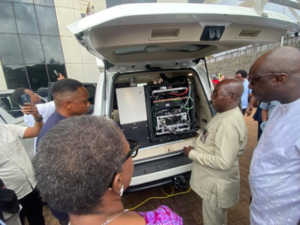
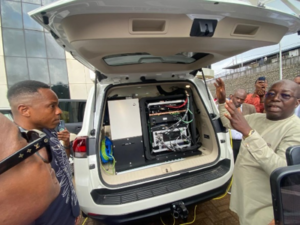
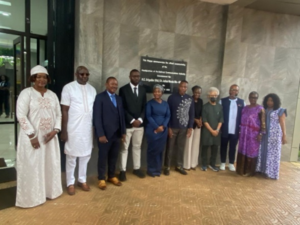
The unveiling and demonstration ceremony was held at NaTCA Tower in Freetown, bringing together Chief Minister Dr David Moinina Sengeh, Minister of Communications, Technology and Innovation Salima Bah, National Coordinator of the Digital Transformation Project Kumba Lilian Musa, NaTCA Director-General Amara Brewah, and representatives of the World Bank, telecommunications operators and other stakeholders.
Speaking at the ceremony, Chief Minister Sengeh emphasised the importance of transparency, accountability and reliable technical data in addressing persistent challenges affecting telecommunications services across the country.
He said the new equipment would enable NaTCA to independently monitor network performance, identify interference and hold licensed telecommunications operators accountable for the quality of services they provide.
According to him, the technology would help strengthen accountability throughout the telecommunications sector, from service providers to the regulator, the Ministry of Communications and the government.

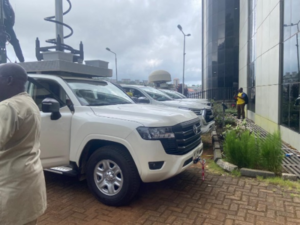
The Chief Minister stressed that investments in telecommunications infrastructure must translate into tangible benefits for ordinary citizens, particularly those in rural and remote communities who continue to experience connectivity challenges.
He disclosed that Sierra Leone had expanded its fibre-optic infrastructure by approximately 80 per cent since 2019, while 3G coverage had increased from about 60 per cent to 100 per cent, and 4G coverage had risen to more than 90 per cent.
He also highlighted the growing availability of 5G services in metropolitan areas, noting that infrastructure development must be accompanied by improved service delivery.
NaTCA Director-General Amara Brewah said the equipment would provide the authority with stronger technical capabilities to monitor spectrum usage, investigate harmful interference and assess the quality of telecommunications services.
The equipment includes a mobile spectrum monitoring system, an automated spectrum management system, mobile quality-of-service measurement equipment, drive-test kits, spectrum analysers and other specialised monitoring tools.
He explained that the mobile monitoring system would help identify unauthorised spectrum use and interference affecting telecommunications, broadcasting and other essential services.
The automated spectrum management system would modernise frequency allocation, licensing, billing and technical analysis, while the quality-of-service equipment would enable NaTCA to independently assess network coverage, internet speeds, call-drop rates and other performance indicators.
National Coordinator Kumba Lilian Musa said the project provided two major forms of support: advanced technical equipment and an institutional gap assessment designed to strengthen NaTCA’s organisational structure, staffing, finances and technical capacity.
She described the interventions as complementary investments intended to ensure that the authority remains well-equipped and institutionally prepared to regulate the rapidly evolving telecommunications sector.
Meanwhile, Minister Salima Bah said the investment formed part of a broader government strategy to strengthen regulatory institutions, protect consumers and encourage private-sector investment.
She noted that equipment alone was insufficient without an effective regulatory framework and the institutional capacity to enforce existing rules.
The minister also highlighted other digital transformation initiatives, including improvements to local internet traffic routing, as part of efforts to reduce costs and improve the country’s digital infrastructure.
The ceremony concluded with a technical demonstration of the equipment, with stakeholders expressing expectations that its effective deployment would improve telecommunications services, promote fair competition and strengthen consumer protection.