By Osman Dumbuya
Questions continue to linger over the whereabouts of Abu Bakarr Sesay, a youth activist formerly based in the Kissy Shell community in eastern Freetown, who reportedly vanished from public view shortly before the August unrest that shook parts of the capital. His disappearance and subsequent declaration as a wanted person by authorities remain a subject of concern, debate, and speculation among residents, civil society actors, and security observers.
According to accounts gathered from community sources and individuals familiar with youth activism networks in eastern Freetown, Sesay was previously known for his outspoken criticism of government policies and active engagement in online and street-level mobilization campaigns. Some of his public remarks, shared through social media platforms and local gatherings, were described by observers as highly critical of state institutions, particularly in the period leading up to the August disturbances.
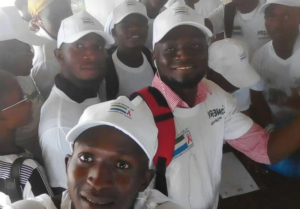
Security officials, in the aftermath of the unrest, reportedly linked several activists to the organization and encouragement of protest activities that escalated into violent confrontations in parts of Freetown. While Abu Bakarr Sesay’s name surfaced in some of these discussions, there has been no publicly verified court ruling establishing his direct involvement in the incidents. Nevertheless, police sources at the time indicated that he was among individuals sought for questioning, and was subsequently declared wanted as part of broader investigations into the unrest.
What has further complicated the narrative is that Sesay had already gone missing before the peak of the August events, raising questions among relatives and community members about whether his disappearance was voluntary, precautionary, or the result of external pressure. Attempts by journalists and local monitors to trace his whereabouts have since yielded no confirmed leads.
Human rights observers have repeatedly called for clarity on his status, urging authorities to distinguish between criminal accountability and legitimate civic activism. They argue that prolonged uncertainty around missing persons linked to political tensions risks deepening mistrust between young people and state institutions.

Within Kissy Shell, residents describe Sesay as a figure who inspired both admiration and controversy. Some young people recall him as a passionate advocate for accountability and youth inclusion in governance, while others describe his rhetoric during the pre-unrest period as increasingly confrontational.
In the broader national context, the August unrest remains a sensitive chapter in Sierra Leone’s recent history, marked by loss of life, arrests, and ongoing debates about political expression, economic hardship, and youth frustration. Among those affected by the aftermath was the late evangelist Samson, whose death following the unrest was widely mourned and remains part of the broader human cost associated with the events of that period.
Despite official statements and ongoing public interest, the whereabouts of Abu Bakarr Sesay remain unknown. Security agencies have not issued updated public information regarding his case, and no confirmed sighting has been reported since his disappearance.
For many observers, the case underscores a broader challenge facing the country: balancing national security concerns with transparency, due process, and the protection of civic space. As investigations into the August unrest continue to fade from daily headlines, unresolved questions such as Sesay’s disappearance remain a reminder of the lingering uncertainties surrounding that turbulent period.
Until his status is officially clarified, Abu Bakarr Sesay remains one of the most talked-about yet unaccounted-for figures linked fairly or otherwise to one of the country’s most tense episodes in recent years.