The Government of Sierra Leone has called for stronger implementation of existing laws and practical safeguarding measures to protect women in the media, while stressing that efforts to promote gender justice must be strengthened, rather than compromise media freedom and editorial independence.
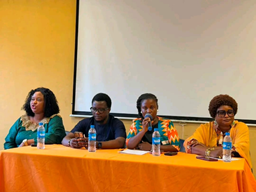
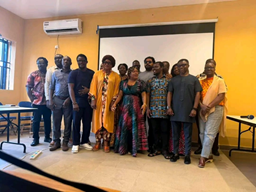
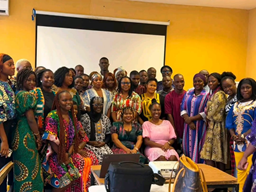
The Director of Information and Government Services, Francess Josephine Kafula, made the call while participating in a Policy Dialogue Forum on Gender Justice in the Media, organised by Women in the Media Sierra Leone (WIMSAL), in collaboration with Comic Relief, on Friday, 21 August 2026, at the Civil Service Training College in Freetown.
Speaking on the issue, the Director said gender justice in the media “is not simply about having more women in newsrooms,” but about creating an environment where women can enter the profession, remain in it, progress and lead without harassment, discrimination or intimidation.
She noted that evidence presented at the dialogue demonstrated that the issue was not abstract, but one affecting real media professionals and having implications for the quality, independence and credibility of journalism.
Director Francess pointed to Sierra Leone’s existing legislative framework, including the Gender Equality and Women’s Empowerment Act, 2022 and the Employment Act, 2023, stressing that “our task now is to strengthen implementation.”
She further backed the proposed Safeguarding Charter as an opportunity to translate existing commitments into practical newsroom procedures, noting that journalists must know where to report abuse, who will listen, how confidentiality will be protected and what safeguards exist against retaliation.
Director Francess also highlighted the changing nature of the media environment, arguing that safeguarding must extend beyond the physical newsroom to digital spaces where women journalists increasingly face harassment and intimidation.
At the same time, she cautioned that safeguarding interventions must be designed to protect media freedom and editorial independence.
“A safe journalist is better positioned to work independently, investigate issues of public interest, and contribute to an informed society,” she said.
The dialogue was informed by findings from the 2025 global study on sexual harassment in the media, which included 298 respondents from Sierra Leone and identified significant gender disparities in experiences of verbal, online and physical sexual harassment. The briefing cautioned that the findings reflect the experiences of participating respondents and should not be treated as a census of all journalists in Sierra Leone.
Participants subsequently considered the proposed Safeguarding Charter, which includes confidential reporting mechanisms, protection against retaliation, clear investigation procedures, referral pathways, digital safeguarding, management responsibility and monitoring of implementation.
The Government’s proposed role includes supporting implementation of existing laws and policies, promoting awareness of labour and gender rights, strengthening journalist safety and digital rights, encouraging compliance with employment standards and working with regulators and media stakeholders on practical implementation.
Director Francess urged stakeholders to move beyond declarations and focus on measurable action.
“We should not leave this dialogue with another declaration. We should leave with measurable commitments,” she said.
The dialogue ultimately positioned gender justice as a broader institutional reform agenda encompassing safety, equality, welfare, representation, digital rights, accountability and media freedom.