By the Gadfly
A party that cannot say what it is for, will eventually be run by those who only know what they want. That is the quiet danger facing the All People’s Congress, and it is why delegates should take seriously the philosophy Dr. Ibrahim Bangura has reduced to three words: Heal, Unite and Build.
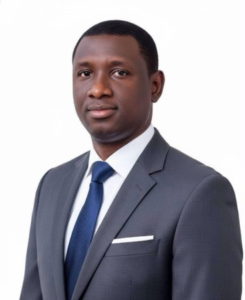
Slogans are cheap, and every party has a drawer full of them. This one is different, because its verbs come in a deliberate order. Healing makes unity possible, and unity makes building last. Reverse the sequence and you get what Sierra Leone has seen too often: ambitious projects launched by divided leaders, abandoned when the quarrel resumes.
Consider the first verb. Unhealed grievance does not fall silent. It decides whom we trust, whom we promote and whom we suspect. The philosopher, Paul Ricoeur, warned that communities can relate to their past pathologically, either by repeating it compulsively or by conveniently forgetting it. The harder path is to remember rightly. Hannah Arendt went further, arguing that forgiveness is the only human act that can interrupt the chain of consequence, freeing both the wrongdoer and the wronged from an endless ledger of debts. To heal is not to deny that injustice occurred. It is to refuse to let injustice become a party’s permanent identity.
The second verb is the most abused word in politics. Unity too often means obedience: be quiet and fall in line. That is not what the mantra asks. Aristotle described civic concord as the bond among citizens, who may disagree on much but agree on the ends, worth pursuing together. John Rawls made the same point in modern terms, arguing that a plural community stays stable when diverse convictions converge on shared principles, not when they are forced into a single creed.
Rousseau supplies the sharpest test, the difference between the general will and the mere sum of private wills. A party is united when its members deliberate toward a common good that no faction owns. It is divided when deliberation becomes a proxy war between ambitions. Africa’s own philosophical tradition names the moral ground beneath this. Ubuntu holds that a person is a person through other persons. No faction rises by diminishing another, because the wound inflicted on a rival is eventually borne by the whole body.
Then comes the verb that separates a movement from a gathering. Goodwill alone builds nothing. Émile Durkheim observed that societies cohere through the working interdependence of their parts as much as through shared sentiment. Douglass North defined institutions as the rules of the game, the constraints that make cooperation among strangers predictable. Robert Putnam showed that trust is a form of capital, accumulated by those who cooperate and squandered by those who do not.
To build, then, is to turn moral energy into durable structure: open elections within the party, transparent procedure, advancement by merit, and the deliberate formation of a new generation of leaders. Max Weber called politics the strong and slow boring of hard boards, and he paired that labor with an ethic of responsibility, in which leaders answer for the consequences of their choices. Building is that ethic made institutional. It ensures the party does not depend on the virtue of any single leader, because rules outlast personalities.
What is true of a party is truer of a nation. A political class at war with itself cannot build roads, schools, courts or markets. National development is, at root, a problem of collective action, and collective action is impossible among people who do not trust one another. The party’s reconciliation is therefore not a private affair. It is a public good, and the country has a stake in whether it succeeds.
Skeptics will raise three objections, and they deserve direct answers. Healing, they say, can become a polite excuse to avoid accountability. It cannot, if the sequence is honoured: just memory comes first, and forgiveness without truth is only forgetting. Unity, they say, can silence dissent. It cannot, if unity means concord and not conformity, because a party that cannot tolerate argument has already lost its capacity to renew itself. And a mantra, they say, is not a programme. That is correct, and it is the point. A philosophy is the foundation on which a programme is built, and a house without one falls no matter how handsome its rooms.
This is why the image of the lion is apt. A lion’s authority lies in composed, confident presence, not in constant roaring. A sleeping lion squanders its inheritance. A wounded and divided one spends its strength on itself. To wake the lion is to call a great movement back to its best nature and to measure the present against the hope of its founders.
Fidelity to a tradition does not mean preserving its forms. It means continuing its spirit under new conditions. The generation that founded this party met its own struggles with the tools of its time. Their heirs honor them not by repeating old methods but by matching their seriousness, their sacrifice and their love of country.
Delegates should therefore put three questions to this philosophy. Does it explain our wounds honestly? Does it offer a method that does not depend on any one personality? And does it point to a destination worthy of the sacrifices already made in this party’s name? I believe the answer to all three is yes.
The founders built a house meant to shelter a nation. Healing, uniting and building is the repair work that will make it stand again. The lion does not need to be invented. It needs only to be awakened.