President Dr. Julius Maada Bio has raised concern over a significant funding shortfall facing Sierra Leone’s 2026 Population and Housing Census, calling for urgent action to ensure the exercise goes ahead as scheduled on December 1.
The President made the call on Thursday, September 10, 2026, during a meeting of the Presidential Development Partners Committee (DEPAC) at State House, where he pressed Government institutions and development partners to improve coordination, accelerate financing and deliver on national development priorities.
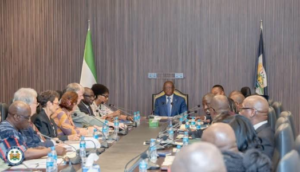
According to President Bio, the census currently faces an estimated US$37 million financing gap, despite the Government committing US$24 million towards the exercise. Of that commitment, approximately US$15 million has so far been disbursed, while development partners have pledged about US$1.5 million.
He called for an immediate financing and disbursement plan to prevent delays and protect the census timetable, stressing that accurate population data is fundamental to effective national planning, resource allocation and the delivery of public services.
President Bio said the financing challenge was part of a broader need for stronger coordination between Government and development partners, as Sierra Leone works to implement the Medium-Term National Development Plan 2024–2030 and its Big Five Game Changers.
He identified data and delivery, democratic governance, youth and human capital development, agriculture, macroeconomic stability, energy, private-sector growth and development financing as key areas requiring sustained attention.
On governance and national cohesion, the President described the return of former President Dr. Ernest Bai Koroma as an opportunity to strengthen reconciliation and ease political tensions in the country.
He urged political leaders and citizens to reject inflammatory rhetoric, regionalism, intolerance and violence, while reaffirming his administration’s commitment to peace, constitutionalism, due process and national unity.
President Bio also called for inclusive and nationally owned constitutional and electoral reforms ahead of the 2028 elections. He said reforms should strengthen electoral institutions, improve voter registration and results management, and establish effective mechanisms for resolving electoral disputes.
Turning to youth employment and agriculture, he called for a shift from subsistence farming towards commercially viable agriculture capable of creating sustainable livelihoods for young people.
He urged closer alignment between the Feed Salone initiative and the Youth Employment Scheme, particularly in skills development, agricultural production, agro-processing, agribusiness, access to finance and market opportunities.
The President further called for a comprehensive national response to harmful drug and substance abuse, combining prevention and law enforcement with mental-health services, treatment, rehabilitation, reintegration, skills development and employment opportunities.
On the economy, President Bio reaffirmed the Government’s focus on fiscal discipline, domestic revenue mobilisation and improved debt management while protecting spending on food security, health, education and social protection.
He encouraged development partners and Government institutions to use available resources more strategically to attract responsible private investment, strengthen small and medium-sized enterprises and women-led businesses, and expand investment in reliable electricity, renewable energy and climate resilience.
With international development financing becoming increasingly constrained, the President said Sierra Leone must diversify its financing approach by combining domestic resources with concessional financing, climate finance and responsible private-sector investment.
To strengthen coordination, President Bio directed the Ministers of Finance, Foreign Affairs and International Cooperation, and Planning and Economic Development to submit a joint framework within 30 days. The framework is expected to address development-partner coordination, financing predictability and mutual accountability.
“Government must lead; partners must align; and both must be accountable for results,” President Bio stated.
He further directed that every agreed development action should have a clearly identified responsible institution, a defined deadline and a measurable outcome, with implementation monitored through the National Development Plan Tracker.
Representing development partners, United Nations Resident Coordinator, Seraphine Wakana, reaffirmed their commitment to supporting Sierra Leone’s development agenda, particularly in strengthening democracy, promoting sustainable peace, creating opportunities for young people and improving data and digitalisation.
She welcomed the Government’s emphasis on national cohesion and evidence-based decision-making and assured that development partners remained ready to support programmes aimed at improving governance and development outcomes.
The DEPAC meeting ended with Government and development partners reaffirming the need for stronger coordination, predictable financing and greater accountability as Sierra Leone seeks to translate its development plans into measurable improvements in the lives of citizens.