2-Day Workshop on Cleaner Fuels and Vehicle Standards Ended in Freetown
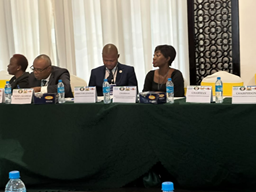
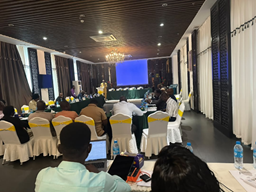
The National Petroleum Regulatory Authority (NPRA), in partnership with the United Nations Environment Programme (UNEP) and the ECOWAS Commission, has concluded a two-day national workshop on cleaner fuels and vehicles aimed at supporting the implementation of ECOWAS Directives of 2021.
The workshop was conducted to promote the use of higher-quality fuels and cleaner vehicles aimed at protecting public health safety and the environment, by way of strengthening regional energy security, and foster greater trade through a more integrated hydrocarbon market.
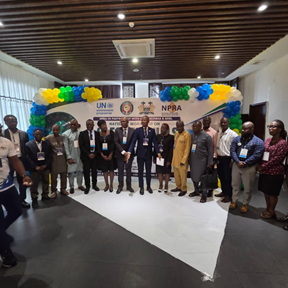
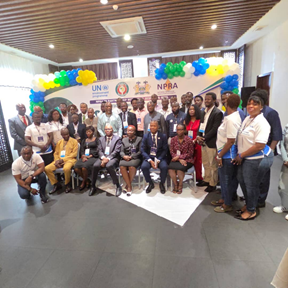
In September 2020, the ECOWAS Council of Ministers adopted two directives to harmonise automotive fuel specifications and vehicle emission standards across the region, providing a framework for cleaner fuels and reduced vehicle emissions.
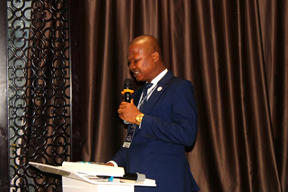
Delivering the keynote address, NPRA Director General, Brima Baluwa Koroma, described the initiative as a collective and multi-sectoral effort that will drive lasting reforms in Sierra Leone and across the ECOWAS region. He noted that air pollution caused by vehicle emissions and substandard fuels remains one of the region’s most pressing environmental and public health challenges.
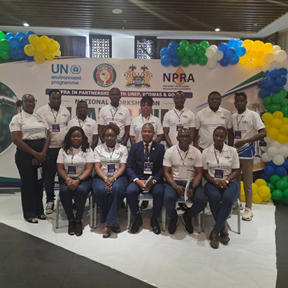
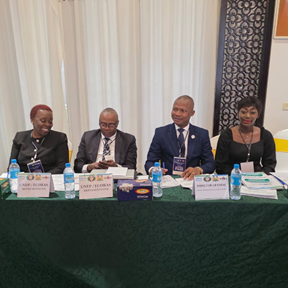
Baluwa Koroma said the NPRA has already taken proactive steps towards meeting regional and global fuel quality standards. While Sierra Leone’s current fuel specification remains at 1,000 parts per million (ppm), he noted that the country’s petroleum pricing formula already operates at 10 ppm well below the ECOWAS target of 50 ppm. He added that Oil Marketing Companies (OMCs) were invited to participate in the workshop as part of efforts to align the industry with the new standards.
He further disclosed that the Authority is working to domesticate the ECOWAS directives by incorporating the required fuel specifications into its licensing framework from 2027 onwards.
Baluwa Koroma emphasized that the successful implementation of the directives will require close collaboration among the NPRA, relevant Ministries, Departments and Agencies (MDAs), regional partners, Oil Marketing Companies, transport unions, vehicle dealers, civil society organisations, and the media through sustained public awareness and stakeholder engagement.


“We must be candid about the work that lies ahead in domesticating these Directives. This will require collaboration between the NPRA, MDAs and regional stakeholders. It will also require constructive engagement with OMCs, Drivers’ Unions, Vehicle Dealers, as well as massive public sensitisation through civil society organisations and the media,” the Director General reaffirmed.
In her presentation, the United Nations Environment Programme (UNEP) representative, Madam Jane Akumu, underscored the importance of transitioning to cleaner fuels and cleaner vehicles, describing the move as essential to improving public health, protecting the environment, combating climate change, and promoting sustainable economic development.
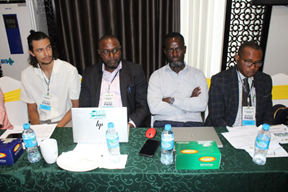
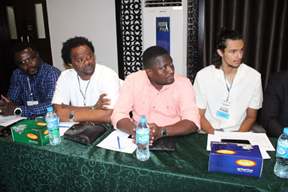
She explained that the use of low-sulphur fuels and modern vehicle technologies significantly reduces harmful emissions that contribute to respiratory diseases, heart conditions, stroke, lung cancer, and premature deaths. According to her, cleaner fuels also enable advanced emission-control systems to operate effectively, leading to improved air quality, particularly in urban centres.
The UNEP representative further noted that while reducing sulphur content alone does not directly lower carbon dioxide emissions, cleaner fuels support the adoption of more fuel-efficient and low-emission vehicles, thereby helping countries reduce greenhouse gas emissions from the transport sector and advance global climate action. She added that UNEP continues to work with governments and regional bodies, including ECOWAS, to promote cleaner fuel standards and vehicle emission regulations across Africa as part of efforts to achieve sustainable transport and environmental protection.
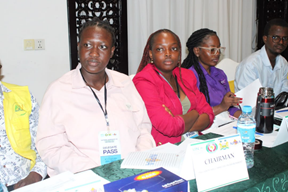
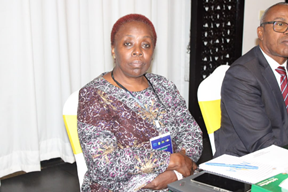
Speaking on behalf of the ECOWAS Commission, Mr. Yao Barnard Koffi reiterated that the regional bloc’s commitment is anchored in Directives C/DIR.1/9/2020 on harmonised automotive fuel specifications and C/DIR.2/9/2020 on vehicle emission standards, adopted by the ECOWAS Council of Ministers in September 2020.
He stressed that implementing the directives will require Member States to strengthen national legislation, improve regulatory oversight, and enforce fuel quality and vehicle emission standards through coordinated action involving governments, petroleum regulators, transport stakeholders, civil society, and development partners.
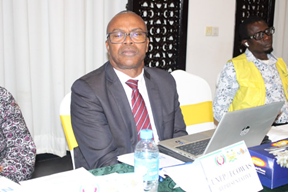
The ECOWAS Commission representative noted that the initiative and roadmap, once legislated and effectively implemented within the regional framework, will contribute to sustainable economic growth while advancing several United Nations Sustainable Development Goals, including Good Health and Well-being, Affordable and Clean Energy, Sustainable Cities and Communities, and Climate Action.
NPRA Media & PR Department
British Council Building
Tower Hill
Freetown.
www.pra.sl.gov.
+23276413022/ +23278947229