Sierra Leone has taken a decisive step in strengthening its global economic diplomacy, joining world leaders at the high-level United States Critical Minerals Ministerial held on Wednesday, February 4, 2026, at the United States Department of State in Washington, D.C. The invitation-only ministerial brought together foreign ministers and senior government officials from across the globe to deliberate on the strategic importance of critical minerals in global supply chains, economic security, and technological advancement.
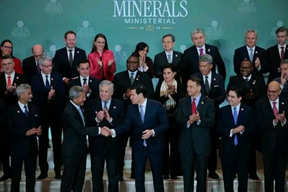
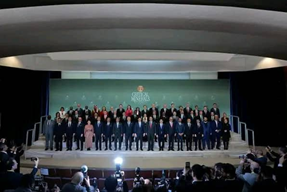
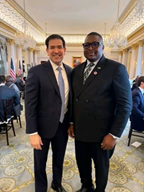
Sierra Leone’s delegation was led by the Minister of Foreign Affairs and International Cooperation, Alhaji Musa Timothy Kabba, underscoring Freetown’s determination to position the country as a responsible and forward-looking partner in the evolving global minerals economy. The summit was hosted by U.S. Secretary of State, Marco Rubio, reflecting Washington’s renewed push to convene like-minded nations around a shared framework for diversifying mineral supply chains and reducing global vulnerabilities.
For Sierra Leone, participation comes at a pivotal moment. The country is endowed with significant mineral resources, including rutile, bauxite, iron ore, and gold, alongside emerging prospects in lithium and rare earth elements—materials increasingly essential for clean energy technologies, electric vehicles, and advanced manufacturing. Minister Kabba’s presence reinforced Sierra Leone’s commitment to translating its natural resource wealth into long-term, inclusive, and sustainable national development.
Explaining the purpose of his visit, the Minister said his engagement combined participation in the Strategic and Critical Minerals Conference with broader bilateral discussions. He was accompanied by Sierra Leone’s Deputy Minister of Mines and senior officials from the Ministry of Foreign Affairs, reflecting the technical depth and policy focus of the delegation.
Drawing on his background as a former Minister of Mines, Kabba emphasized the growing importance of resource diplomacy in modern international relations. He noted that natural resources now sit at the intersection of economic growth, national security, and environmental sustainability. He further highlighted that the extractive-sector policies pursued under President Julius Maada Bio have laid a solid foundation for such engagements, with an emphasis on transparency, value addition, and safeguarding the long-term national interest.
The ministerial opened against a backdrop of heightened global concern over the fragility and concentration of critical mineral supply chains. Senior U.S. officials and international partners stressed the urgency of securing resilient and diversified sources for minerals vital to modern economies. In his opening remarks, Secretary of State Marco Rubio described access to critical minerals as a top priority for the U.S. administration, emphasizing their central role in economic security, national defense, and technological innovation.
U.S. Vice President JD Vance, delivered keynote remarks, underscoring that despite the digital character of today’s economy, it remains fundamentally dependent on physical resources. He noted that erratic pricing and market distortions have discouraged long-term investment worldwide, leaving resource-rich developing countries unable to fully translate mineral wealth into sustained development. To address these challenges, Vance announced a sweeping U.S.-led initiative aimed at restoring predictability to global mineral markets, centered on the creation of a preferential trade zone for critical minerals with enforceable price floors and coordinated trade policies among participating nations.
Japan’s State Minister for Foreign Affairs, Horii Iwao, welcomed the U.S. initiative and expressed strong support for collective action, highlighting Japan’s own efforts to diversify mineral supply sources. As the ministerial progressed into closed-door sessions, participants broadly agreed that diversified, transparent, and rules-based supply chains are essential for global growth and security. Discussions are expected to culminate in new bilateral and multilateral agreements, positioning the ministerial as a foundational step toward a more stable global minerals market.
The Washington engagement forms part of a broader diplomatic strategy aimed at strengthening Sierra Leone’s role in international economic governance. The Sierra Leonean delegation used the platform to emphasize the country’s intention to move beyond raw material exports toward value addition, job creation, and stronger linkages between mining and the wider economy. Officials highlighted ongoing policy reforms, sustainable mining practices, and efforts to integrate renewable energy into mining operations.
As global competition for critical minerals intensifies, Sierra Leone’s participation at the highest diplomatic level signals a clear statement of intent, reflecting a growing recognition that foreign policy, economic strategy, and sustainable development are increasingly interconnected. Through its engagement, Sierra Leone reaffirmed its place in the emerging global conversation on economic security and sustainable development—an engagement that could help shape the country’s development trajectory for decades to come.