In a decisive move to foster effective dialogue and augment collaboration among key players within the Downstream Petroleum Industry, the National Petroleum Regulatory Authority (NPRA) has engaged the Sierra Leone Petroleum Transportation Association and petroleum dealers at the Authority’s headquarters in Freetown. The engagement aims at positioning petroleum dealers on the right trajectory, as the industry prepares for 2026, another deliverable year.
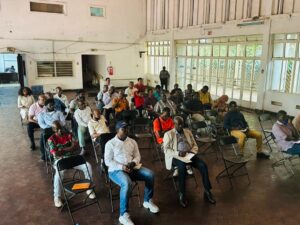
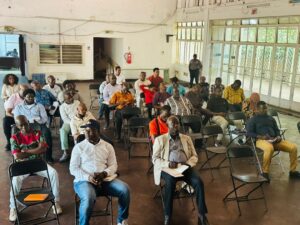
Chairing the meeting on behalf of the Director General, the Deputy Director General of NPRA, Evangelist Alfred M. Kobba, noted that the meeting was long overdue. He explained that the Director General had initially intended for this engagement to take place as far back as late October, in order to identify potential irregularities and address them before the New Year. This, he said, would ensure collective progress and strengthen the stability of all industry stakeholders.
The Deputy Director General reaffirmed the Authority’s strong commitment and unwavering resolve to enforce strict regulations and standards that will prevent unforeseen challenges capable of jeopardizing the sector. He emphasized that the meeting would focus primarily on two key agenda points: Licensing and Inspection, and Engineering and Quality Assurance.
Speaking on his part, the Director of Licensing and Inspection, Mr. Jayah K. Muana, commended petroleum dealers for their swift response in attending the meeting, and applauded their continued cooperation with the Authority. He gave an overview of the key mandates of the NPRA, which include overseeing, licensing, regulating, and monitoring the availability of all petroleum products across the country, covering importation, export, bunkering, distribution, transportation, and retailing. He added that the Authority executes these mandates in consonance with the reviewed pricing formula, while regulating all activities within the Downstream Sector.
Director Jayah further stressed that compliance, like in all regulatory environments worldwide, is pivotal to driving growth within the sector. Compliance, he explained, simply means adhering to established regulations for the benefit of not only the regulators, but also the Oil Marketing Companies and petroleum dealers. He emphasized that the insistence on strict compliance and safety standards stems from the nature of the petroleum sector, which is hazardous, vulnerable, political, and above all, unpredictable and volatile. For these reasons, the Authority does not compromise on compliance or safety. He urged petroleum dealers to be innovative and adopt modernized safety measures at every station, whether service or gas stations, as the Authority will be vigilant and firm going into the New Year.
The Deputy Director of Engineering and Quality Assurance, Ing. Alusine Barrie, provided a clear explanation of the difference between two categories of stations: Filling Stations and Service Stations. He noted that a Filling Station primarily stores petroleum products for sale to the general public, while a Service Station comprises additional facilities such as car washes, mini-marts, pharmacies, and restaurants. Ing. Barrie added that a conducive Filling Station, equipped with office space, storage facilities, canopy, and tank farm, requires a minimum of two plots of land, whereas a functional Service Station requires at least three plots of land.
The Secretary General for the Petroleum Union, Mr. Mohamed Sillah, also addressed the gathering and appealed on behalf of dealers, particularly those who have been frequently violating industry regulations. He pleaded with the Authority to be considerate and calm in implementing strict compliance policies in the New Year. He further requested that the Authority provide the names of potential defaulters so that the union can begin internal dialogue with them and address the issues accordingly.
NPRA Media & PR Department.