A Young Man’s Fearful Flight
By Sorie Fofanah
When a fuel tanker explosion ripped through a busy part of Freetown in November 2021, it did more than claim lives—it set in motion a chain of events that would eventually swallow a young man into silence. Among those killed were the parents of Mohamed Suliman Koroma, leaving him and his two sisters orphaned overnight.
Neighbours interviewed for this report remember Mohamed as quiet and withdrawn in the weeks after the fire. “He was not the same boy again,” one resident said. “He became the head of the family without choosing it.”
The parents were buried in December 2021, and soon after, a senior male relative stepped in. Multiple sources confirm that the man was, at the time, an acting Paramount Chief. He assumed responsibility for the children’s welfare, but what followed, according to interviews with community members and people close to the siblings, was not protection but abandonment.
“They were taken out of their father’s house,” a family acquaintance said. “At first we thought it was care. Later, we realised it was control.”
By 2022, Mohamed and his sisters were reportedly without stable shelter. They survived through farm labour and odd jobs, moving between relatives and community spaces. No official complaint was made. In rural Sierra Leone, several sources explained, challenging a traditional authority figure is seen as dangerous—especially for orphans.
That fragile survival collapsed in June 2024.
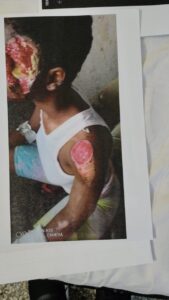
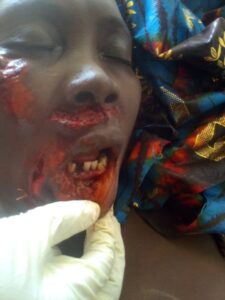
According to accounts from Mohamed himself and two community insiders interviewed separately, the siblings were working on a farm one evening when several men confronted them. The encounter quickly turned violent. Mohamed was beaten, losing two teeth. His sister Kadiatu A. Koroma suffered injuries to her face, shoulder, and arms.
A youth leader from a neighbouring village, who asked not to be named, said the nature of the attack was alarming. “This was not thieves or drunk men. These people came knowing exactly who they wanted.”
During the assault, the attackers allegedly made statements suggesting the siblings had been “handed over” by their uncle. The implication was clear: this was punishment, not crime.
The siblings were dragged into a forest and held for hours. Their escape, according to the account, came by chance. “If those men did not fall asleep, none of them would be alive,” said one source familiar with Mohamed’s testimony.
What places Mohamed at the centre of this case is what allegedly happened days earlier, in May 2024.
According to multiple interviews, Mohamed had been discovered in a private setting with another young man from the same community. The other man’s father, identified as a Chief Imam, reportedly confronted the situation angrily. In conservative communities like this one, suspicion alone can be enough to trigger violence.
A local human rights activist explained: “Once religion and sexuality mix, logic disappears. People believe they are acting in God’s name.”
Mohamed’s name reportedly spread quickly. Fear followed.
The convergence of power is what makes the case particularly troubling. On one side stood a Chief Imam, a moral authority. On the other, an acting Paramount Chief—Mohamed’s own uncle—who would later be formally installed as Paramount Chief. Together, these offices shape discipline, punishment, and silence.
When contacted for comment, a representative speaking on behalf of the Chief Imam denied any involvement in violence. “The Imam condemns harm and has no connection to any attack,” the statement said. “Any suggestion that he ordered or supported violence is false.”

However, when asked whether the Imam was aware of threats made against Mohamed, the response was cautious: “Cultural matters are often exaggerated by outsiders.”
Community members interviewed dispute that framing. “Nothing here happens by accident,” said an elder. “When powerful people are angry, boys disappear.”
After the attack in June 2024, Mohamed vanished.
Multiple sources confirm he fled immediately, fearing he would be killed if he stayed. His current location is unknown. Some describe him as a “wanted man,” not by police, but by informal networks of power. As of 2025, he has not returned, contacted community leaders, or appeared publicly.
His sisters’ situation remains unclear. Efforts by this reporter to establish their whereabouts were unsuccessful.
Legal experts say Mohamed’s case sits at the intersection of several dangers: orphanhood, family betrayal, traditional authority, and laws that criminalise same-sex relationships. “When all these factors combine,” one lawyer said, “the victim has no shield.”
No arrest has been made. No official investigation has been announced. The Paramount Chief continues to hold office. The Chief Imam remains respected. Mohamed Suliman Koroma remains missing.
For those who knew him, the silence is loud. “He survived fire,” a former neighbour said quietly. “He survived hunger. But power—power chased him away.”
As long as Mohamed’s whereabouts remain unknown and the allegations unexamined, his story stands as a stark warning: in places where authority is unchecked, survival sometimes means disappearance.