Pavi Fort AL Associates (SL) Ltd has signed Memoranda of Understanding (MoUs) for two major infrastructure development projects aimed at transforming Sierra Leone’s urban landscape, strengthening national connectivity and creating more than 600,000 jobs. The company has also secured a US$200 million financing facility agreement with the African Export-Import Bank (Afreximbank) to support the proposed developments.
The agreements were signed on the sidelines of the West Africa Integration and Investment Summit (WAIIS), where infrastructure investment, regional integration and economic development featured prominently.
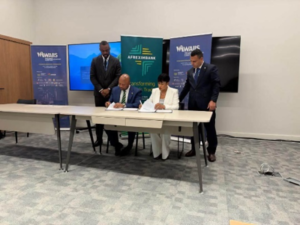
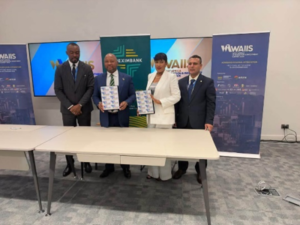
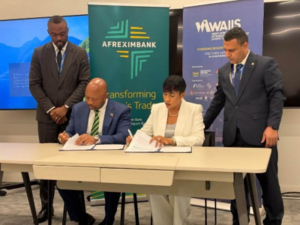
The proposed developments comprise a Three Cities Initiative, which includes a new administrative capital, an eco-tourism hub and an airport city linked by a 49-kilometre highway, alongside a 550-kilometre Ring Road Initiative designed to connect the northern, southern and western regions of the country to Freetown.
Under the Three Cities Initiative, the proposed 49-kilometre highway will connect the planned new administrative capital with Lungi International Airport. Pavi Fort projects that the road could reduce travel time along the corridor to approximately 40 minutes, improving access to the airport while creating opportunities for new urban, commercial and economic centres.
The second undertaking, the Ring Road Initiative, proposes a 550-kilometre road network connecting key parts of the country through three principal routes: Masiaka–Kenema, Masiaka–Bo and Masiaka–Kambia. The proposal also incorporates an upgrade of the Cline Town–Wellington road to improve traffic movement, particularly for heavy-duty vehicles serving the country’s existing seaport.
According to the company, the two initiatives are expected to generate more than 600,000 jobs. However, details of the projected employment figures, including the sectors expected to benefit and the timeframe for job creation, have not yet been provided.
Further details of the Three Cities Initiative are contained in a November 2026 report titled “Unlocking Sierra Leone’s Next Growth Corridor: Milestone 2”, which outlines a proposed development corridor connecting the Freetown metropolitan area with Lungi International Airport.
The report identifies three major development areas: a New Administrative Capital, New Lungi City and an eco-tourism development on Tasso Island.
The proposed New Administrative Capital is envisaged as a modern centre for Government administration, business, education and public services. Its development plans include a government district, central business district, university campuses, technical and vocational education and training facilities, residential communities and supporting infrastructure.
New Lungi City, meanwhile, is envisioned as an airport-oriented urban centre incorporating residential, commercial, hospitality and business facilities. Its strategic location is expected to support airport-related activities, proposed port and logistics operations and economic activities along the wider development corridor.
Tasso Island has been identified as a potential eco-tourism destination, with plans for nature-based recreational activities, environmentally sensitive accommodation and visitor facilities. The report emphasises the importance of balancing tourism investment with the protection of the island’s natural environment.
The broader development vision also incorporates a proposed port and logistics gateway around Lungi, intended to strengthen Sierra Leone’s capacity for international trade, freight handling, warehousing and industrial operations. Collectively, the proposed developments are designed to establish an integrated urban and economic corridor capable of attracting investment and supporting long-term growth.
On transportation, the report assesses the potential impact of the proposed Freetown–Lungi corridor on travel times. Its modelling estimates that road travel between the proposed new administrative capital and Lungi International Airport could decline from approximately two hours and 29 minutes to 56 minutes, based on the assumptions used in the assessment.
For travellers departing from Central Freetown, the projected journey could decrease from almost three hours to approximately one hour and 25 minutes. However, the report clarifies that these figures represent road-only, free-flow travel estimates and exclude ferry and water-taxi services.
The report also highlights environmental and land-use considerations that must inform the proposed developments. These include the protection of mangroves and other sensitive ecosystems, flood-risk assessments, effective drainage systems, waste management and restrictions on construction within protected areas.
Particular attention is drawn to Tasso Island, which falls within the Sierra Leone River Estuary protected area. The report recommends that development on the island should be limited to low-impact eco-tourism activities to safeguard its ecological integrity.
Beyond the Freetown–Lungi corridor, the proposed 550-kilometre Ring Road Initiative is expected to improve connectivity between major regional centres and facilitate the movement of people, goods and services. The proposed links between Masiaka, Kenema, Bo and Kambia, together with the Cline Town–Wellington road upgrade, are intended to address existing transportation challenges and strengthen access to commercial and industrial areas.
Despite the scale of the proposed developments, the November 2026 growth corridor report indicates that the Three Cities Initiative remains at the data collection and vision development stage. It explains that the current work is intended to establish the evidence base and strategic direction required for subsequent masterplanning.
Consequently, further feasibility studies, detailed engineering designs, environmental and social impact assessments, land-use planning and implementation arrangements will be necessary before the proposals can progress into actual construction.
The signing of the MoUs and the US$200 million financing agreement represents a significant step in Pavi Fort’s ambition to position large-scale infrastructure investment as a catalyst for Sierra Leone’s economic transformation.
Nevertheless, the successful delivery of the projects will depend on the availability of additional financing where required, clear institutional and contractual arrangements, environmental safeguards and realistic implementation timelines. The proposed employment benefits, particularly the target of more than 600,000 jobs, will also require further clarification as the projects advance from planning to implementation.