Minister Julius Mattai Chairs 13th Extraordinary Meeting of ADPA
LUANDA, ANGOLA, 5 November 2026 —
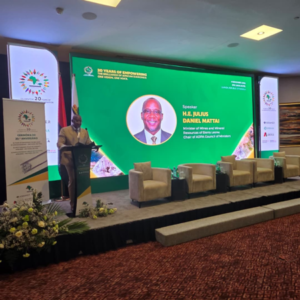
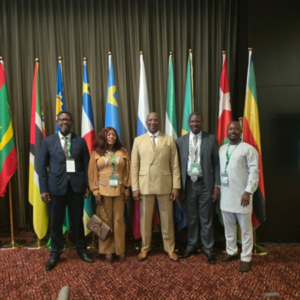
Twenty years to the week after twelve African governments signed the Luanda Declaration, the Honourable Julius Daniel Mattai, Minister of Mines and Mineral Resources of the Republic of Sierra Leone and Chair of the Council of Ministers of the African Diamond Producers Association (ADPA, 2025–2027), presided over the Association’s twentieth-anniversary commemoration, ADPA@20, from 2 to 5 November 2026. The Minister led a delegation comprising Mr Charles Tom Kamanda, Permanent Secretary of the Ministry and Chair of the ADPA Committee of Experts; Dr Kelvin Anderson, Deputy Director-General of the National Minerals Agency (NMA); Mr Mohamed M. Bah, NMA Director of Precious Minerals Trading; and NMA Senior Diamond Valuer, Mrs Massah Koroma. Sierra Leone did not attend as a guest. It sat at the head of the table.
Day One — the experts prepare the ground (3 November)
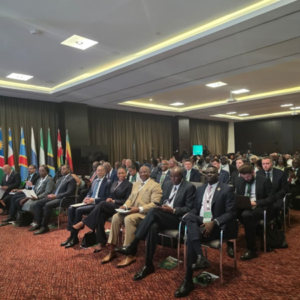
The programme opened on 2 November with a tour of the ADPA Headquarters, inaugurated in Luanda last year. On 3 November Mr Kamanda chaired the 13th Extraordinary Meeting of the ADPA Committee of Experts, with eight Member States and three Observers, which produced a decision-ready report for the Ministers on the ADPA@20 Declaration, the 2027 Annual Performance Plan and Budget, an amended Procurement Policy and Botswana’s request to join the Association. Dr Anderson and Mr Bah represented Sierra Leone in the afternoon’s technical sessions, where Tanzania, South Africa’s State Diamond Trader, Zimbabwe’s ZCDC and ALROSA gave the first public account of implementing the ADPA Sustainable Diamond Standard — the first diamond standard written by Africans, for African stones, on African terms.
Day Two — a Council decides, and a Chair reports (4 November)
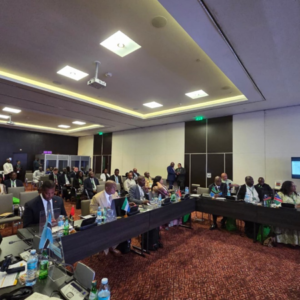
Following the official opening by Angola’s Minister of Mineral Resources, Petroleum and Gas, Hon. Diamantino Pedro Azevedo, Minister Mattai called to order the 13th Extraordinary Meeting of the ADPA Council of Ministers. He did not flatter the moment: the value of world rough production has fallen 42 per cent since 2022; laboratory-grown stones now fill more than half of engagement rings in the largest consumer market at US$85 a carat; and Sierra Leone’s own recorded production fell by four-fifths last year when one mine closed its gates.
“Why does the continent that holds the richest diamond deposits on earth hold so little of the power to decide what those diamonds are worth? We are the inheritors of that question. This morning, with the decisions before us, we are also its answer.” — Hon. Julius Daniel Mattai
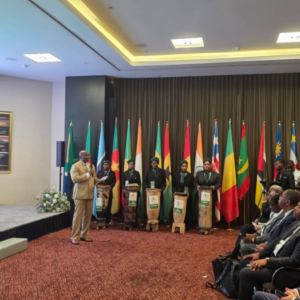
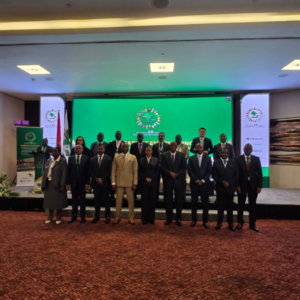
Under his chairmanship, the Council admitted the Republic of Botswana as an Observer — “Twenty years after it signed the Luanda Declaration, Botswana is back at this table. Welcome home” — adopted the ADPA@20 Declaration, approved the Five Ngomas (One Voice, One Standard, One Market, One Intelligence, One Force) as the Association’s ambitions to 2046, and approved the 2027 Annual Performance Plan of five objectives and twenty projects. With Botswana at the table, the governments in the room now speak for more than ninety per cent of the world’s natural rough diamonds by value. The Final Communiqué was approved by one o’clock.
That afternoon, before Ministers, the Chair of the Kimberley Process Mr Yashvir Singh, the Board Chair of The Diamond Collective, De Beers, ALROSA and the diplomatic corps, Minister Mattai delivered the ADPA@20 Keynote Address and read the Declaration. “I am not here to share an aspiration,” he told the hall. “I am here to report a decision. What you will hear is not the vision of a Chair. It is the act of a Council.” He named the test squarely — “This is not competition. It is a contest for the meaning of the word ‘diamond’” — and then turned the mirror into a drum:
“Africa’s share of the world’s rough rose last year to fifty-four per cent by volume and more than sixty per cent by value. No factory can manufacture that. No sanction can relocate it. Origin is the product. And the origin is ours.” — Hon. Julius Daniel Mattai
He reported that the position adopted by the Council in Freetown in May 2026 — that the four Cs belong to natural diamonds and synthetics should be sold by the gram — has since been written into Indian law; that Africa will go to the Kimberley Process Plenary in New Delhi with one statement, not fifteen, before Ghana assumes the Chair in 2027; and that as Botswana, Angola and Namibia become co-owners of De Beers, “Africa does not come to that table as a supplier. It comes as a partner, and it intends to be heard.” The measure of the next twenty years, he said, “will not be the carats we produce. It will be the classrooms we build, the clinics we equip, the young geologists, gemmologists, cutters and jewellers we train, and the dignity we restore to the woman and the man who dig for diamonds in a river.” He closed to a standing ovation: “The founders struck the drum in 2006. This morning a Council of Ministers struck it again. Let us strike it harder. Let us strike it together.”
Day Three — the Luanda Accord and a new partnership with Botswana (5 November)
On 5 November the Minister joined Ministers Azevedo and Kenewendo, The Diamond Collective, GJEPC of India, De Beers and the Antwerp and Dubai diamond centres at the Luanda Accord Meeting on funding the global marketing of natural diamonds. Speaking in the Participant Reflections and Commitments session, he pledged Sierra Leone’s unconditional political, advocacy and technical commitment — offering the country’s traceable artisanal supply chain and the “Blood Diamond” story to the campaign — and announced that he will take to Cabinet, this quarter, a memorandum recommending that Sierra Leone formalise a sliding-scale financial contribution, subject to Cabinet’s decision. “I do not intend to ask others to keep a promise my own country has not kept,” he said, while calling for African contributions to be pooled through an ADPA Fund so that “one African seat is a voice,” and for audited public reporting of every dollar.
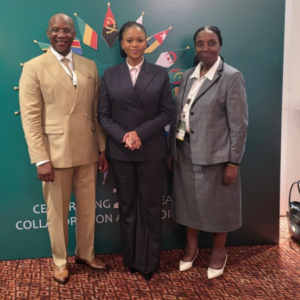
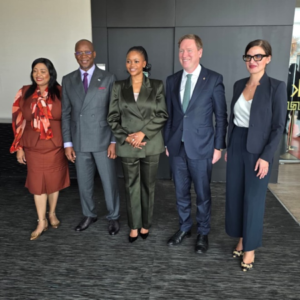
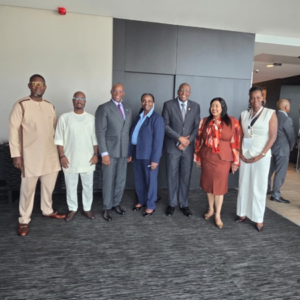
On the margins, Minister Mattai met the Minister of Minerals and Energy of the Republic of Botswana, Honourable. Bogolo Joy Kenewendo. The two Ministers agreed on preliminary work towards a joint technical working group to draft a Partnership and Cooperation Memorandum of Understanding between Botswana and Sierra Leone in diamond exploration, mining and value addition — drawing on Botswana’s unrivalled experience in state participation, rough-diamond sales, cutting and polishing and the Diamonds for Development model, and on Sierra Leone’s reforms in licensing, artisanal formalisation and digital export verification.
What this means for Sierra Leone
Sierra Leone’s chairmanship has placed a small producer at the centre of decisions that will shape the price, the description and the story of African diamonds for a generation. The dividends are concrete: a continental front that protects the premium on Sierra Leone’s gem-quality alluvial stones against factory-grown substitutes; a Sustainable Diamond Standard that can let a Kono stone be believed without leaving Africa; a seat, through ADPA, in how natural diamonds are marketed to the world; direct partnership with Botswana to build exploration, mining and value-addition capacity at home; and strengthened relations with India, De Beers and the global trade on the eve of the Kimberley Process Plenary. For the more than 120,000 Sierra Leoneans who depend on diamond mining, and for a treasury rebuilding after a difficult year, the message from Luanda is that Sierra Leone will no longer be only where diamonds are found. It intends to be where their value is decided.
“For a century we mined for others to wear. The day is coming when Africa is itself one of the great markets for its own diamonds.” — Hon. Julius Daniel Mattai
The END