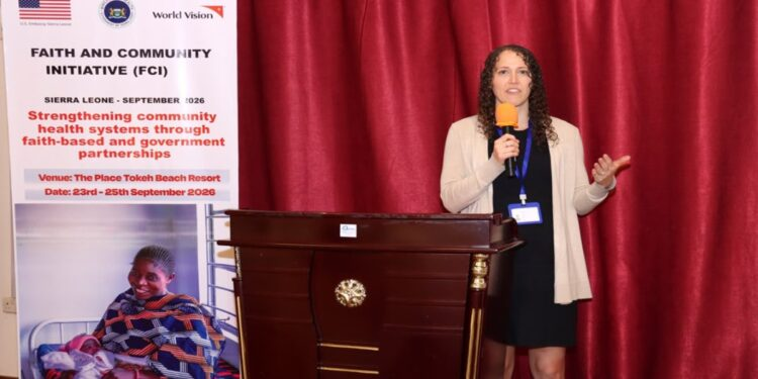
The United States Government has committed $6 million to support Sierra Leone’s health sector through a new Faith and Community Initiative aimed at expanding access to essential healthcare services, strengthening community-based health delivery and improving health outcomes among vulnerable populations.
The initiative, announced in Freetown on Wednesday, 7 October 2026, will be implemented by World Vision Sierra Leone in coordination with the Ministry of Health and Sanitation. It is designed to strengthen the connection between faith-based health facilities and existing community health structures, bringing essential medical services closer to families, particularly those living in remote and underserved communities.
The investment is expected to support interventions in several critical areas of Sierra Leone’s healthcare system, including HIV prevention and treatment, tuberculosis (TB) control, malaria prevention and management, maternal and child healthcare, and nutrition services. These remain key public health priorities as the country continues efforts to improve access to quality healthcare and reduce preventable illnesses and deaths.
Under the programme, faith-based health institutions will work alongside community health workers and other local structures to improve the delivery of essential health services. By linking established healthcare facilities with community-level networks, the initiative seeks to make health information, preventive services, early diagnosis and referrals more accessible to people who may face geographical, financial or other barriers to obtaining medical care.
The programme also reflects the important role that religious institutions and community organisations play in reaching populations that may otherwise have limited contact with formal healthcare services. Churches, mosques and other community networks often maintain strong relationships with residents, making them valuable partners in health education, disease prevention and the promotion of healthier practices.
U.S. officials have indicated that the initiative will focus on strengthening Sierra Leone’s existing national health systems rather than establishing parallel service delivery structures. The approach is intended to build on the country’s current healthcare infrastructure, improve coordination among service providers and promote local ownership of health interventions.
A further objective is to facilitate the gradual transfer of key responsibilities to local institutions over time. This transition is expected to support the long-term sustainability of the programme by strengthening local capacity and ensuring that essential services can continue beyond the period of external support.
The $6 million investment comes at a critical time for Sierra Leone, where maternal and child mortality remain major public health concerns and malaria continues to place a substantial burden on healthcare facilities. Children under five, pregnant women and people living in hard-to-reach communities are among those who require consistent access to preventive, diagnostic and treatment services.
Strengthening community-level healthcare delivery is therefore considered an important component of efforts to reduce preventable deaths, encourage early treatment and improve health outcomes. By bringing services closer to households, the initiative could help communities identify health problems earlier and connect patients with appropriate care before their conditions become more serious.
Faith-based healthcare providers already make a significant contribution to service delivery in Sierra Leone, particularly in rural areas where access to public health facilities can be limited. Catholic, Methodist and Adventist hospitals and clinics, alongside other religiously affiliated institutions, provide medical care to communities across the country. Their established presence and community relationships offer an important platform for expanding the reach of national health programmes.
World Vision Sierra Leone, which has worked in the country for decades across health, water, sanitation and hygiene (WASH), and child welfare programmes, will lead the implementation of the initiative. The organisation is expected to collaborate with district health management teams, local councils, religious networks and community health workers to coordinate activities and reach vulnerable households.
The involvement of district health teams and local authorities is expected to help align programme activities with national health priorities and local needs. Collaboration among these stakeholders will also be important in identifying service gaps, strengthening referral systems and ensuring that communities receive appropriate health information and support.
The initiative places particular emphasis on community participation, recognising that sustainable improvements in public health require more than the availability of medical facilities. Public awareness, early healthcare-seeking behaviour, trust in service providers and the involvement of local leaders are also essential to improving the use of available services.
Through partnerships with religious and community institutions, the programme is expected to provide additional opportunities for health education and outreach, particularly in locations where healthcare workers and facilities may be difficult to access. Such engagement could also help address misconceptions surrounding certain diseases and encourage individuals and families to seek timely medical assistance.
The Ministry of Health and Sanitation has welcomed the initiative, describing its objectives as consistent with the government’s efforts to advance Universal Health Coverage and strengthen community ownership of healthcare services.
Universal Health Coverage seeks to ensure that individuals and communities can access the health services they need without suffering financial hardship. Achieving this goal in Sierra Leone requires sustained investment in health infrastructure, human resources, essential medicines, preventive care and community-based service delivery.
The collaboration between the United States Government, World Vision Sierra Leone, the Ministry of Health and Sanitation, and faith-based and community organisations is expected to contribute to these broader national objectives.
However, the long-term impact of the investment will depend on effective coordination, transparent implementation, adequate monitoring and the ability of local institutions to sustain the services introduced or strengthened through the initiative.
As implementation progresses, the programme’s contribution will ultimately be measured by its ability to improve access to essential healthcare, strengthen local service delivery and produce tangible health benefits for Sierra Leoneans, particularly women, children and families in underserved communities.
The $6 million commitment represents a significant investment in community-centred healthcare and underscores the importance of partnerships between government institutions, international development partners and local organisations in addressing the country’s pressing health challenges.