Every day, thousands of people walk, drive, or do business on Lamina Sankoh Street in the heart of Freetown.
They know the street. Few know the man. Yet without him, Sierra Leone’s journey towards independence might have taken a very different path. His name was Lamina Sankoh. But history first knew him by another name.
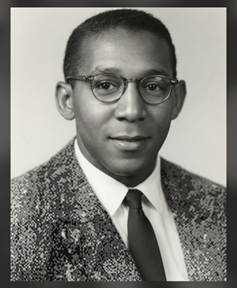
He was born Etheldred Nathaniel Jones on 28 June 1884 in Gloucester, a mountain village overlooking Freetown, British Sierra Leone. He was born into a respected Creole (Krio) family, a community that had developed along the coast through the history of freed Africans and returned settlers.
As a young man, he carried the name given to him at birth, a name with strong Western and Welsh origins.
However, in the early 1920s, he made a decision that would reflect one of the deepest beliefs of his life. He changed his name to Lamina Sankoh. This was not simply a personal change. It was a political and cultural statement.
At a time when Sierra Leone was divided between the coastal Colony and the inland Protectorate, Lamina Sankoh believed those divisions weakened the future of the country. He felt that his European influenced birth name did not fully represent the African identity and national unity he wanted to promote.
By adopting the name Lamina Sankoh, a name rooted in the wider African experience, he was symbolically rejecting the idea that Sierra Leoneans should be separated by colonial history, ethnic background, or geography.
The name represented his lifelong dream: One Country. One People. He wanted to build a bridge between the Krio community of the Colony and the indigenous communities of the Protectorate.
His journey began with education. He attended the village school in Gloucester before studying at The Cathedral School, Albert Academy, and the CMS Grammar School. His academic brilliance eventually earned him admission to Fourah Bay College, where he obtained a Bachelor of Arts degree, before continuing his studies in Theology and Philosophy at Wycliffe Hall, University of Oxford.
But Lamina Sankoh believed education had a purpose far greater than personal success. It was meant to liberate minds.
When he returned to Sierra Leone in 1924, he was ordained as a priest and appointed Curate of Holy Trinity Church in Freetown. Yet he was not an ordinary clergyman. His sermons challenged complacency. He spoke about equality. He questioned injustice. He encouraged Africans to think for themselves. His progressive views unsettled many within the church, and by 1927, he left the ministry.
Many would have seen that as failure. Lamina Sankoh saw it as freedom. He returned overseas to study education before travelling to the United States, where he taught at several historically Black institutions, including Tuskegee University, Lincoln University, and South Carolina State University. Those years exposed him to new ideas about education, Black leadership, Pan-Africanism, and self-determination.
In 1930, he moved back to Britain and joined the West African Students’ Union (WASU), one of the most influential Pan-African organisations of its time. As editor of the union’s journal, he wrote passionately about colonial rule, African identity, and the urgent need for self-government.
Long before independence became a reality, Lamina Sankoh was already helping Africans imagine it. When he returned home in the 1940s, he did not wait for change. He created it.
He resumed teaching through Fourah Bay College’s adult education programme and became President of the Freetown Adult Education Society. He established a Penny Savings Bank to encourage financial independence among ordinary Sierra Leoneans, and founded an independent African church where worship reflected African identity rather than colonial tradition.
He also launched a newspaper called The African Vanguard, using journalism to educate, challenge, and inspire the public.
But his greatest contribution was still to come. At the time, Sierra Leone was deeply divided. The Colony and the Protectorate were often treated as separate political worlds. Many accepted those divisions. Lamina Sankoh rejected them. He believed Sierra Leone could never become a strong nation if its people remained politically divided. His dream was simple but revolutionary. One country. One people.
To promote that vision, he established the People’s Forum, where Sierra Leoneans discussed national identity and the country’s future. Then, in 1948, he founded the People’s Party, one of Sierra Leone’s first modern political parties. Its mission was clear: unite the Colony and the Protectorate under one national movement. History was about to reward that vision.
On 27 April 1951, the People’s Party, the Protectorate Education Progressive Union (PEPU), and the Sierra Leone Organisation Society (SOS) merged in Bo to form the Sierra Leone People’s Party (SLPP). Lamina Sankoh was one of its principal founders, alongside leaders including Sir Milton Margai and Paramount Chief Julius Gulama. Together, they laid the political foundation that would eventually lead Sierra Leone to independence on 27 April 1961.
Lamina Sankoh never became Prime Minister. He never became President. He never sought power for its own sake. His greatest ambition was something bigger than political office. He wanted Sierra Leoneans to see themselves as one people, regardless of where they came from. He believed education could unite a nation. He believed ideas could be more powerful than weapons. He believed that freedom meant little unless it belonged to everyone.
Lamina Sankoh passed away in 1964. Today, his name lives on through one of Freetown’s busiest streets. Yet a street sign alone cannot tell his story. It cannot tell us about the teacher who inspired minds. The priest who challenged convention. The journalist who spoke truth. The Pan-African thinker who believed in self-government. Or the patriot who helped lay the foundations of modern Sierra Leone.
Perhaps the greatest tribute we can pay Lamina Sankoh is not simply to drive along the street that bears his name. It is to remember the man whose vision helped shape the nation we call home. The next time you pass through Lamina Sankoh Street, remember this. It is not named after a building. It is not named after a businessman. It is named after one of the forgotten architects of Sierra Leone’s independence, a man who changed his own name because he wanted his identity to reflect the African nation he dreamed of building. A man who believed that a united nation begins with educated minds and a shared purpose.
How many Sierra Leoneans knew the remarkable story behind Lamina Sankoh Street? If you learned something new from this story, follow our page for more untold stories from Sierra Leone’s past. Share this post and help us preserve the memory and legacy of one of Sierra Leone’s greatest nation builders for future generations