By Foday Moriba Conteh
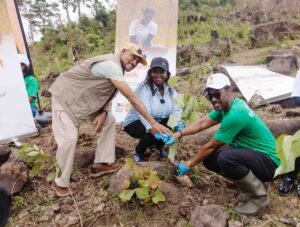
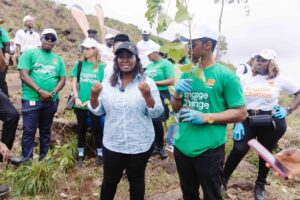
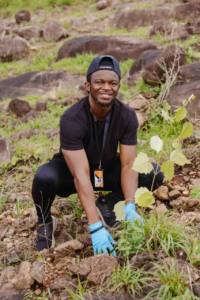
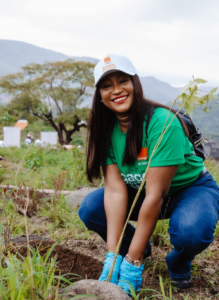
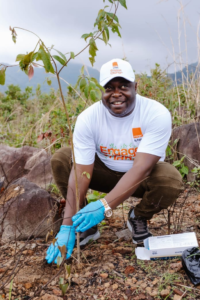
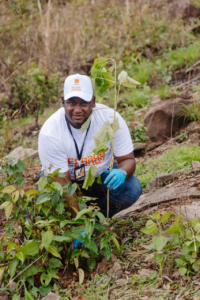
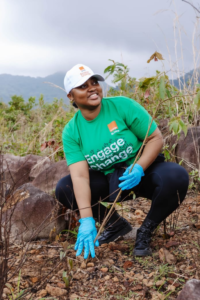
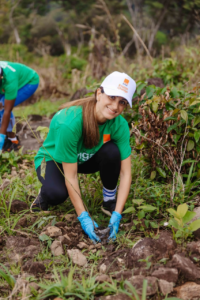
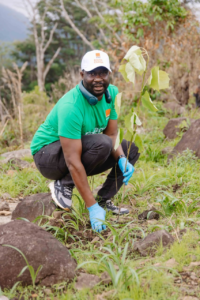
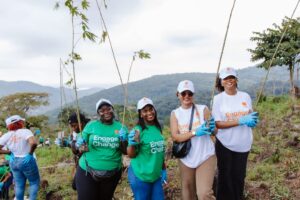
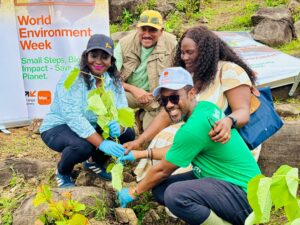
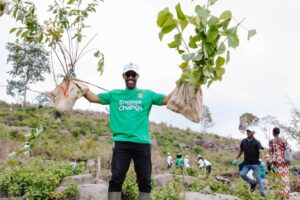
As part of activities marking World Environment Day 2026, Orange Sierra Leone, in partnership with Tacugama Chimpanzee Sanctuary, on Friday, June 5, 2026, undertook a major tree-planting exercise at the Tacugama Chimpanzee Sanctuary, planting 5,000 trees across six acres of degraded forest within the Western Area Peninsula National Park.
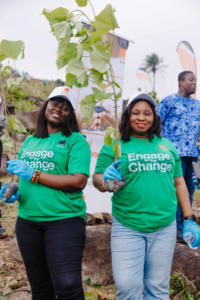
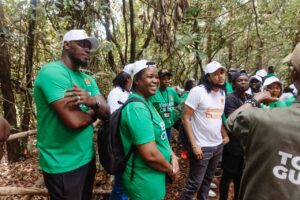
The initiative brought together Government officials, environmental advocates and more than 180 Orange Sierra Leone employees in a collective effort to promote reforestation, combat climate change and protect Sierra Leone’s fragile ecosystem.
Speaking at the event, Orange Sierra Leone’s Sales Director, Alpha Bundu, underscored the importance of environmental protection and called for collective action to safeguard nature.
He described World Environment Day as a global occasion that highlights the value of nature and its role in sustaining human life. According to him, Orange Sierra Leone’s responsibility extends beyond telecommunications to include protecting the environment and supporting sustainable development.
“As a company, we believe our responsibility goes beyond connecting people through telecommunications. We also have a duty to contribute to environmental protection and sustainability,” Alpha Bundu said.
He noted that environmental conservation requires collaboration among stakeholders and commended Tacugama’s Founder and Director, Bala Amarasekaran, for his longstanding commitment to wildlife conservation and environmental protection.
Alpha Bundu stressed that Orange Sierra Leone’s commitment goes beyond planting trees. He said the company hopes to inspire other institutions to undertake similar initiatives and work together to preserve the environment for future generations.
He highlighted the participation of more than 150 staff members, including senior Management and Directors, as evidence of the company’s dedication to environmental stewardship.
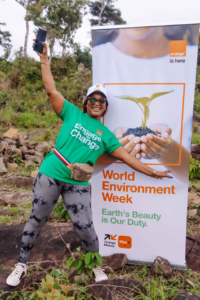
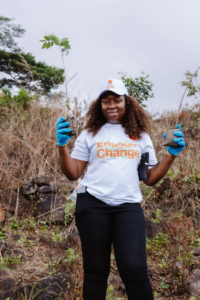
According to him, Orange Sierra Leone has previously planted more than 1,000 trees in the Tacugama area, many of which are now thriving. The company has also undertaken beach-cleaning exercises and other environmental activities under its “Engage for Change” campaign.
“The need to protect the environment goes beyond today’s activity. It is something we must do every day. We all have a responsibility to keep our environment safe,” he emphasized.
Alpha Bundu also expressed concern over increasing construction and human activities around protected areas, warning that such developments threaten biodiversity and critical water sources that supply much of Freetown. He called for stronger public-private partnerships to address environmental challenges and ensure the sustainable management of Sierra Leone’s natural resources.
Also speaking at the event, Tacugama Chimpanzee Sanctuary Founder and Director, Bala Amarasekaran, raised alarm over the rapid destruction of forest cover within the Western Area National Park, warning that continued encroachment threatens water security, biodiversity and the future of Freetown.
He explained that the area where the tree-planting exercise took place was once covered by dense forest but has been significantly degraded over the past three years due to encroachment.
“We are standing within the National Park. In fact, we should not even be planting here because there was already a forest in this area. Unfortunately, most of the destruction you see has happened within the last three years,” he said.
Bala Amarasekaran warned that increasing construction activities within and around protected areas pose serious risks to water catchment systems that serve hundreds of thousands of residents in Freetown. He noted that poor waste management and sanitation practices could contaminate underground water sources and worsen environmental degradation.
He commended Orange Sierra Leone for supporting the initiative, describing the partnership as an important step toward restoring degraded ecosystems.
“For 32 years, Tacugama has worked to protect this environment. Today we are planting 5,000 trees, but this is only the beginning,” he said.

According to him, the long-term objective is not simply to plant trees but to restore degraded landscapes and reclaim protected areas for future generations.
Bala Amarasekaran attributed the growing deforestation problem to weak enforcement of existing environmental laws. While noting that Sierra Leone possesses strong wildlife and forestry legislation, he argued that authorities must do more to enforce those laws and prevent illegal encroachment.
“If people are encroaching on protected areas, the answer cannot simply be to describe it as lawlessness. The laws exist and must be enforced,” he stated.
He further warned that continued destruction of forest cover could increase the risk of landslides and other environmental disasters. Referring to the devastating 2017 mudslide, he stressed the importance of preventive action rather than reacting after disasters occur.
“I am not interested in simply planting 5,000 trees and walking away. The priority is to maintain and protect them and ensure that this area remains preserved,” he added.
Bala Amarasekaran called for greater political commitment to environmental protection, urging leaders to place environmental issues at the center of national development discussions.
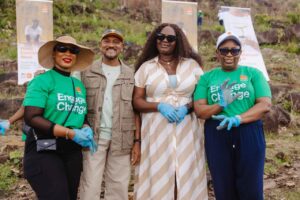
Representing the Government of Sierra Leone, Deputy Minister of Environment and Climate Change, Mima Yema Mimi Sobba-Stephens, commended Orange Sierra Leone and Tacugama Chimpanzee Sanctuary for demonstrating leadership in environmental conservation.
She described the initiative as an investment in the future, emphasizing the critical role trees play in sustaining life and maintaining healthy ecosystems.
“I want to say a big thank you to Orange Sierra Leone for taking this bold step. This is exactly the direction we need to move as a country because the future of our children, our nation and the world depends on how well we protect our environment today,” she said.
According to the Deputy Minister of Environment tree planting is essential because trees provide oxygen, improve air quality, and help combat climate change.
“What has been done today is highly symbolic. Planting trees is like giving life to future generations,” she noted.
Responding to concerns about increasing encroachment on protected lands, Mima Yema Mimi Sobba-Stephens disclosed that the Government is working toward establishing a specialized Environmental Court to handle environmental violations more effectively.
“We are working towards setting up an Environmental Court that will specifically handle environmental cases. This court will ensure that environmental violations are addressed more effectively and promptly,” she revealed.
She added that the Ministry of Environment and Climate Change is collaborating with the judiciary, the Ministry of Lands and other stakeholders to tackle environmental challenges and strengthen enforcement mechanisms.
The Deputy Minister of Environment assured Sierra Leoneans of the Government’s commitment to protecting forests, biodiversity and natural resources, while calling on citizens and institutions to support environmental conservation efforts.
Meanwhile, Orange Sierra Leone’s Chief Climate Officer, Danetta Younge, reaffirmed the company’s commitment to sustainability and climate action.
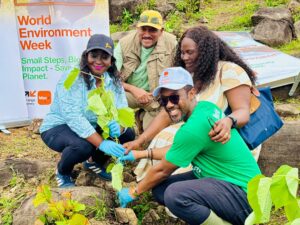
She disclosed that more than 180 Orange Sierra Leone employees volunteered for the initiative, demonstrating the company’s dedication to restoring nature and creating a greener future.
“On this World Environment Day, we reaffirm our commitment to protecting our planet through sustainable actions and collective responsibility. Today, over 180 employees volunteered to plant 5,000 trees, symbolizing our dedication to restoring nature, combating climate change and building a greener future for generations to come,” she said.
The event concluded with participants planting thousands of trees across degraded sections of the national park, reinforcing calls for stronger environmental protection, sustainable land management and collective action to preserve Sierra Leone’s natural heritage for future generations.