By: BLESSING AND PROMISE KAM
Makeni stood as a symbol of hope and renewal when Dr. Ibrahim Bangura, leader of the DIB Movement and aspirant for the APC flagbearer, joined worshippers for Eid‑ul‑Adha prayers. His presence was more than ceremonial; it was a deliberate act of solidarity, humility, and vision. The people of Bombali welcomed him with warmth and reverence, affirming their trust in a leader who speaks not only of politics, but of healing, unity, and love for his homeland.
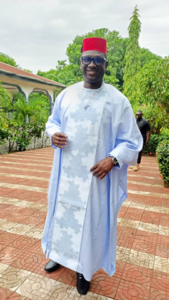
Dr. Bangura’s message during Eid was deeply rooted in the values of sacrifice, compassion, and solidarity—principles that define Eid‑ul‑Adha and, in his view, must also define Sierra Leone’s future. He urged citizens to rise above divisions of tribe, region, and party, reminding them that the destiny of Sierra Leone lies in collective nation‑building. His mantra, “Heal, Unite and Build,” was not a slogan, but a roadmap for national transformation. He envisioned a Sierra Leone where peace is the foundation, unity the strength, and development the reward.
In his dialogue with the women of Bombali, Dr. Bangura articulated a bold vision of inclusion. “Any nation wey wan succeed for true, e must carry women along,” he declared, underscoring his belief that women are not secondary participants, but central architects of progress. He called for equal inclusion in leadership and national development, pledging to create opportunities that empower women and children to realize their full potential. His words resonated with the women’s groups present, many of whom openly pledged their support, seeing in him a leader who values their voice and contribution.
The APC Bombali District executives received him with pride, describing his decision to pray with the people as a testament to humility and grassroots commitment. Dr. Bangura, in turn, thanked the people for their loyalty, calling Bombali “the heart of the APC.” He emphasized that Sierra Leone must be restored to sanity through discipline, decency, and respect in political engagement. He condemned violence in internal elections, reminding supporters that politics must be conducted with dignity and that “there is life after elections.”
His love for Bombali was evident in every word he spoke. He spoke of his desire to see Bombali united, strong, and leading by example in national cohesion. He envisioned a Bombali where youths are empowered, elders are respected, women are included, and children are nurtured. For him, Bombali is not just a district; it is the heartbeat of Sierra Leone’s unity, a model for reconciliation and progress.
Hon. Salieu Osman Turay (SOS) captured the spirit of the moment when he described Dr. Bangura as “a brother and a younger version” of former President Ernest Bai Koroma, affirming his place as the party’s next hope. The cheers of the crowd, the pledges of women’s groups, and the embrace of party executives all underscored one truth: Dr. Ibrahim Bangura’s vision is not about politics alone—it is about national renewal.
Makeni’s reception of Dr. Bangura was historic. The people declared that they saw in him a leader who embodied their aspirations. His visit was not just about prayers; it was about planting seeds of reconciliation, empowerment, and unity. And as Bombali looks ahead, Dr. Bangura’s vision rings louder than ever: a Sierra Leone healed of division, united in purpose, and built on the strength of its people.