The Government of Sierra Leone has unveiled plans to host a major regional investment summit aimed at repositioning the Economic Community of West African States (ECOWAS) toward economic integration and sustainable growth, as part of the leadership agenda of President Julius Maada Bio.
The initiative, described as a flagship programme under President Bio’s tenure as Chairman of the ECOWAS Authority of Heads of State and Government, seeks to rebalance the bloc’s priorities after decades dominated by security and political challenges.
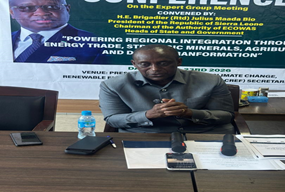
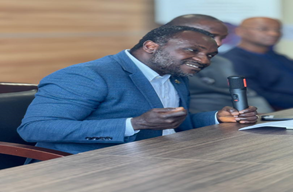
Speaking at a high-level briefing, Dr Kandeh Kolleh Yomkella emphasized that while peace and security remain critical, long-term stability in the region depends on economic development, job creation, and shared prosperity.
“Without development, you cannot sustain security, democracy, or political stability,” he noted, describing the shift as a necessary return to the founding vision of ECOWAS, which was established over 50 years ago primarily to drive economic integration.
He said that to ensure focus and impact, the government has narrowed the scope of the initiative to four key sectors considered central to West Africa’s economic transformation:
- Energy trade
- Strategic minerals
- Agribusiness
- Digital transformation
He revealed that these pillars will form the basis of technical discussions and investment strategies leading up to the summit.
He noted that a steering committee comprising ministers responsible for finance, foreign affairs, energy, agriculture, mining, and digital communications has been working closely with the President to refine the agenda. Technical working groups drawn from across ECOWAS member states have also been convening virtually over the past several months to develop policy frameworks and investment proposals, he said.
According to Dr.Yumkella, ahead of the main summit, Sierra Leone will host a series of technical sessions involving 25 to 30 experts per sector. These sessions will bring together regional policymakers, development finance institutions, and international experts to deliberate on draft documents and identify actionable projects.
Outcomes from these discussions will be presented to the ECOWAS Council of Ministers before being submitted to Heads of State for endorsement at a statutory summit scheduled for July, 2026 in Lungi.
The full-scale investment summit is expected to take place later in November, also in Lungi, and will attract global business leaders, investors, and development partners.
The Minister of Planning and Economic Development Madam Kenyeh Barley highlighted critical gaps hindering regional economic integration, particularly the lack of “bankable” projects capable of attracting large-scale investment.
“We do not have sufficient regional or national investment-ready projects to drive cross-border trade and integration,” she explained, underscoring the importance of the upcoming summit in bridging that gap.
She explained that discussions will focus on boosting power generation and expanding regional transmission networks to enable electricity trade across borders. While existing infrastructure such as the West African Power Pool offers significant capacity, officials noted that underutilization remains a challenge due to limited generation.
She noted that the initiative aims to strengthen regional cooperation in negotiating global resource deals and increasing value addition within West Africa, adding that many countries lack accurate data on their mineral reserves, often placing them at a disadvantage in international agreements.
She emphasized that proposals are being developed for a regional exploration fund, potentially managed by the African Development Bank, to support geological surveys and resource mapping.
There are also plans to develop cross-border “development corridors” to link mineral extraction with infrastructure, industrialization, and job creation.
In his statement the Minister of Agriculture, and Food security Dr Musa Kpaka said that rice production is another key focus area. West Africa currently spends billions of dollars annually importing rice despite having suitable conditions for large-scale cultivation.
The proposed “Rice Offensive” initiative aims to mobilize investment in mechanization, irrigation, and input supply systems to achieve regional self-sufficiency he said
He continued that Fertilizer production and distribution will also be prioritized, leveraging regional resources such as phosphate deposits and existing manufacturing capacity in countries like Morocco and Nigeria.
The Deputy Minister of Energy said that plans are also underway to explore major energy corridors and alternative solutions, including modular power systems, to meet growing industrial demand particularly from mining operations.
Officials described the initiative as a turning point for ECOWAS, aligning economic ambition with practical investment strategies.
“This is about moving from vision to implementation,” Yumkella said. “We are creating a platform that connects policy, investment, and regional cooperation in a way that delivers real results for our people.”
With preparations intensifying and international partners already engaging, Sierra Leone is positioning itself at the center of a renewed push for West African economic integration, one that places prosperity alongside peace as the foundation for the region’s future.