By Fadda Bakish
The Government of Sierra Leone has taken a significant step toward achieving national food security, as the Minister of Agriculture and Food Security, Dr. Henry Musa Kpaka, on Thursday led a high-level delegation on a conducted tour of the Torma Bum Rice Project—now entering an effective operational phase under the flagship Feed Salone Agenda.
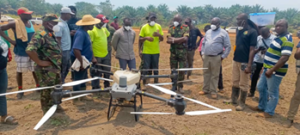
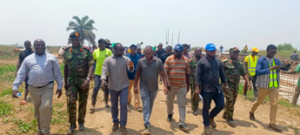
The tour brought together key stakeholders, including the Chief of Defense Staff, Lieutenant General Amara Idara Bangura, representatives from civil society, and senior members of the media. The visit aimed to provide firsthand insight into the scale, progress, and transformative potential of the initiative, which is widely regarded as one of Sierra Leone’s most ambitious agricultural development projects.
Located in a fertile agricultural zone, the Torma Bum Rice Project is designed as a comprehensive agro-industrial hub, integrating large-scale rice production, modern irrigation, processing, storage, and marketing systems. At the heart of the project is the construction of four standard irrigation systems that will support the cultivation of approximately 4,000 hectares of rice farmland—marking a historic milestone for irrigated agriculture in the country.
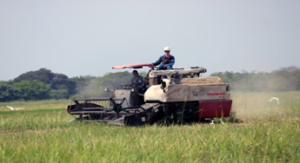
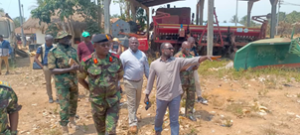
Officials say the irrigation systems, once completed, will represent the first large-scale irrigation scheme of its kind in Sierra Leone, enabling year-round farming and boosting productivity to unprecedented levels. The systems are being constructed by Pavi Fort, with financing support from the Islamic Development Bank and the Government of Sierra Leone.
The broader project itself is funded by the African Development Bank through a $34 million, five-year investment that also includes operations in Kambia District. The initiative is aligned with the government’s Feed Salone Agenda, which seeks to reduce dependence on imported rice, enhance food self-sufficiency, and stimulate rural economic growth.
During the tour, Dr. Kpaka expressed satisfaction with the steady progress made so far, noting that this marked his third visit to the site this year. He highlighted visible advancements in land preparation, irrigation infrastructure, and the development of a modern rice processing center.
“I am happy to see that ploughing is ongoing, irrigation works are advancing, and the processing center is taking shape,” he said. “Under Feed Salone, we are building agricultural hubs like this one, which function as complete ecosystems for rice production.”
He emphasized that the government’s vision extends beyond rice cultivation alone. “We want to produce enough rice to feed the nation, but we are also developing livestock, vegetables, and other value chains,” he added. “There is ample land and opportunity here for private sector investment, and we will soon be putting out bids to attract investors.”
Dr. Kpaka reaffirmed his commitment to working with the administration to actualize its food security goals, stressing that projects like Torma Bum are critical to transforming Sierra Leone’s agricultural landscape.
The Chief of Defense Staff, Lieutenant General Bangura, also expressed strong support for the initiative, describing the project as both impressive and strategic. He indicated that the Republic of Sierra Leone Armed Forces would scale up its involvement in agricultural production by leveraging the resources and infrastructure available at Torma Bum.
“I am highly impressed with what I have seen here,” he stated. “This area has everything we need to succeed in large-scale agriculture. We will redirect our efforts to Torma Bum and utilize the available clusters to maximize production.”
He disclosed that the military plans to deploy equipment and cultivate approximately 5,000 acres at the site, positioning Torma Bum as a central hub for its agricultural activities. According to him, the armed forces have already developed significant cashew plantations in other regions and are now expanding into rice production to support national food supply and military self-sufficiency.
Providing further technical insights, the Project Coordinator, Abdulai Bum Wai, explained that the Torma Bum Rice Project is structured into three key phases. The first phase focuses on infrastructure development, including irrigation systems, warehousing, and road networks. The second phase emphasizes technology development, particularly the production of high-quality seeds by the Sierra Leone Agriculture Rice Research Institute. The third phase centers on production, processing, and job creation, culminating in the establishment of an agro-industrial cluster.
He noted that the project already features modern storage facilities that double as processing units, incorporating paddy rice milling, drying systems, and agrochemical support services. These facilities are expected to significantly reduce post-harvest losses while enhancing the quality and marketability of locally produced rice.
Officials from the Sierra Leone Rice Agro Industrial Cluster underscored the importance of irrigation as the cornerstone of the project. They acknowledged that while initial timelines projected completion within one year, the scale and complexity of the infrastructure required careful execution.
“The irrigation component is the backbone of this project,” one official explained. “When the four systems are completed, they will serve as a game changer for agriculture in Sierra Leone. This will enable us to cultivate rice up to three times a year, alongside vegetables, significantly increasing output and farmer incomes.”
The RAIC initiative integrates production, processing, and marketing into a single value chain, ensuring efficiency and sustainability. The planned construction of a standard processing factory will further enhance the project’s capacity to package rice for distribution across the country, reducing reliance on imports and stabilizing local markets.
As the tour concluded, stakeholders expressed optimism that the Torma Bum Rice Project would serve as a model for agricultural transformation nationwide. With strong government backing, international financing, and growing interest from the military and private sector, the project is poised to play a pivotal role in achieving Sierra Leone’s food security ambitions.
Ultimately, Torma Bum stands as a symbol of a renewed commitment to agricultural self-reliance—demonstrating how strategic investment, innovation, and collaboration can unlock the country’s vast agricultural potential and secure a more prosperous future for its people.