By Mackie M. Jalloh
A sharp political exchange has erupted between the ruling Sierra Leone People’s Party (SLPP) and the opposition All People’s Congress (APC) following public statements made by the Director of Communications at State House, Myk Berewa, during an interview on SLIK TV on Monday, 19 January 2026. The dispute, which has since spilled onto social media, highlights deepening partisan tensions over who deserves credit for Sierra Leone’s development gains—and whether those gains are reaching ordinary citizens.
During the interview, Berewa mounted a robust defence of President Julius Maada Bio’s governance record, particularly in education and key socio-economic indicators. He argued that the SLPP administration adopted a deliberate, data-driven approach upon assuming office. “When we came into office, we studied the educational architecture of every district in the country. We do not just build for the sake of building. We assess necessity,” Berewa said.
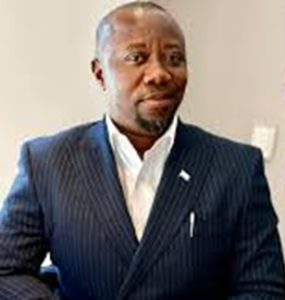
He framed President Bio’s leadership as a clear break from what he described as the failures of the past, stating that the President’s speeches reflect “a shift from idealism to pragmatism, stability, and delivery.” In a pointed partisan attack, Berewa declared that “education under APC was shameful in this country,” a remark that immediately provoked strong reactions from the opposition.
Berewa further outlined what he described as tangible achievements under the current administration, including a claimed 70 percent reduction in maternal mortality, an eight percent increase in rice production, reduced rice imports, and declining rice prices. Shortly after the interview, he shared excerpts of his remarks on social media forums, reigniting debate and drawing a swift rebuttal from Joseph Saidu Momoh Jr., an APC Diaspora senior member.
In a strongly worded response, Momoh questioned both the substance and tone of Berewa’s claims. “What kind of education is better than ‘silver and gold’ quotes?” he asked, dismissing what he described as rhetorical governance rather than measurable transformation. According to Momoh, official narratives of progress do not reflect the lived realities of ordinary Sierra Leoneans.
“Despite progress, literacy, learning quality, maternal deaths, and rice self-sufficiency are still far below what our people need,” Momoh said. “The SLPP government must explain why real transformation hasn’t reached every community.”
Momoh forcefully rejected the portrayal of the APC era as a period of failure, pointing instead to post-war reconstruction efforts from the early 2000s through 2018. He noted that APC-led governments focused on rebuilding schools destroyed during the civil war, expanding access to education, and strengthening teacher training programmes nationwide. “Challenges remained, yes, but access expanded significantly during that period,” he argued.
On education outcomes, Momoh acknowledged improvements in expected years of schooling and survival rates since 2005, including gains associated with the Free Quality Education programme. However, he stressed that Sierra Leone continues to lag behind its neighbours in West Africa, particularly in learning outcomes and overall quality. Citing extrapolated data from the African Development Bank and the World Bank, he noted that adult literacy remains at approximately 48.6 percent nationally—below the regional average. “This shows that long-term progress requires sustained, multi-party effort,” he said, “not self-congratulation at every stop.”
Momoh was equally critical of Berewa’s claims regarding maternal mortality. While acknowledging a significant decline, he described it as misleading to attribute the progress solely to the current administration. World Bank data show that Sierra Leone’s maternal mortality ratio dropped from about 1,680 per 100,000 live births in 2000 to roughly 354 in 2023—a reduction of about 75 percent over more than two decades. “Whilst you bring results out, you must credit those who put in the work before you,” Momoh wrote. “Academically, this looks like plagiarism.”
The exchange underscores intensifying political competition as both parties seek to control the national narrative on development, performance, and accountability. What began as a television interview has now evolved into a digital and political showdown, reflecting broader struggles for credibility and public trust as Sierra Leoneans continue to question not just who delivers progress, but who truly benefits from it.