The Government of the United States has formally asked Sierra Leone to accept deported “third-party nationals” as part of conditions being discussed for the removal of the full U.S. visa restrictions currently affecting the country, Minister of Foreign Affairs and International Cooperation, Alhaji Timothy Musa Kabba, has confirmed.
Speaking on January 14, 2026, in an interview with Truth Media, the Minister disclosed that Washington’s request goes beyond the repatriation of Sierra Leonean nationals, and includes a controversial proposal for Sierra Leone to accept deportees who are not citizens of the country.
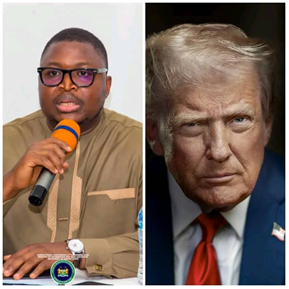
The Foreign Minister’s disclosure comes amid intensified diplomatic engagements aimed at reversing the U.S. travel restrictions that reportedly took effect on January 1, 2026, under U.S. Presidential Proclamation 10998, which placed Sierra Leone among countries facing sweeping limitations on both immigrant and non-immigrant visas. The U.S. action, according to the Minister’s remarks, is linked to concerns about information sharing and cooperation on deportations.
During the interview, Truth Media Co-founder and presenter, Amadu Lamrana Bah, pressed the Minister on whether Sierra Leone was being asked to accept non-citizens as part of the discussions.
“What is the U.S. Government asking for? Does it have to do with accepting third-party nationals into the country?” Lamrana Bah asked.
In response, the Minister explained that Sierra Leone already hosts nationals from the sub-region under established regional mobility arrangements and immigration provisions, particularly the ECOWAS protocol.
“If you have ECOWAS people that come to Sierra Leone, they have the right to be here for 90 days. They can either renew their stay or return to their country,” the Foreign Minister stated.
However, he noted that the current U.S. request introduces a new layer of sensitivity, because it involves deportees who may not be Sierra Leoneans, but are linked to Sierra Leone through questionable or historically acquired documentation.
Drawing comparisons with Ghana, Minister Timothy Kabba said some West African nations have accepted third-party nationals under specific arrangements, but Sierra Leone must act responsibly and protect its national interest.
“Ghana does it, i.e., they take on board third-party nationals, but West African people,” Timothy Kabba said, adding that Sierra Leone also handles similar cases, but with significant caution and accountability.
He revealed that Sierra Leone has previously accepted deportees from the United States who possessed Sierra Leonean passports, even when there were doubts over their actual nationality.
“We have had a lot of people coming from the U.S. that obtained passport during the civil war and went to the U.S. under the refugee program,” he said. “You know that they are not Sierra Leoneans, because they cannot even speak any of our local languages, and some have fictitious place of birth.”
Despite those concerns, the Minister explained that such individuals have often been accepted because they carried Sierra Leonean documents, only for many to later return to their countries of origin after arrival in Sierra Leone.
“Those people, we accept them because they have Sierra Leonean documents, but after which some find their way back to their countries of origin,” he stated.
When asked directly whether the U.S. has officially requested Sierra Leone to accept third-party nationals, the Foreign Affairs Minister confirmed that such a request has indeed been made, but emphasized that Sierra Leone is drawing a firm boundary.
“A request has been made to us for third party nationals,” he confirmed. “What we are contemplating now is if we’re going to take third-party nationals based on the refugee status, it will be West Africans. We are not going to take anybody who’s not a West African.”
The Minister further clarified that Sierra Leone’s response will be guided by its existing refugee framework.
“We would look because we have a refugee law if we want to take third-party nationals,” he said, noting that for the sake of strengthening bilateral ties, the U.S. may make such requests, but Sierra Leone must not compromise national security and sovereignty.
On the issue of Sierra Leoneans currently held by U.S. Immigration and Customs Enforcement (ICE), the Minister disclosed that his Ministry has been provided with data indicating that about 52 Sierra Leoneans are presently in ICE custody.
“I do have a data that was supplied to me yesterday. We have about 52 Sierra Leoneans that are in the custody of ICE,” he said, adding that the Government is working with the U.S. State Department to process emergency travel certificates to facilitate their return.
He also confirmed that nationality verification is already underway, noting that four individuals were verified at the Sierra Leone Embassy as recently as the day before the interview.
“Yes, even yesterday we verified four people in the embassy and they’re coming back to Sierra Leone,” he said.
The Foreign Affairs Minister stressed that Sierra Leone is not seeking to avoid responsibility for its citizens, but will ensure proper verification, so the country is not forced into accepting deportees outside agreed regional considerations. “We are not negotiating for our own people; they belong to Sierra Leone,” he stated. “When we verify their nationality we will help facilitate their return to Sierra Leone.”
With negotiations underway, the Foreign Minister’s remarks signal Sierra Leone’s willingness to cooperate with the United States, but only within legal limits and regional responsibility; rejecting any move that could turn the country into a destination for deportees with no legitimate West African ties.